<?xml version="1.0" encoding="utf-8"?><feed xmlns="http://www.w3.org/2005/Atom" ><generator uri="https://jekyllrb.com/" version="3.10.0">Jekyll</generator><link href="https://www.nourishingfoodmarketing.com/feed.xml" rel="self" type="application/atom+xml" /><link href="https://www.nourishingfoodmarketing.com/" rel="alternate" type="text/html" /><updated>2026-06-27T00:50:18+00:00</updated><id>https://www.nourishingfoodmarketing.com/feed.xml</id><title type="html">Nourishing Food Marketing</title><subtitle>Nourishing Food Marketing - Expert marketing services for food and nutrition businesses.
</subtitle><author><name>Nourishing Food Marketing</name></author><entry><title type="html">5 Lessons on How to Drive Grocery Velocities for your CPG Brand (Big or Small) with Shopper Marketing</title><link href="https://www.nourishingfoodmarketing.com/2022/03/22/5-lessons-on-how-to-drive-grocery-velocities-for-your-cpg-brand-shopper-marketing/" rel="alternate" type="text/html" title="5 Lessons on How to Drive Grocery Velocities for your CPG Brand (Big or Small) with Shopper Marketing" /><published>2022-03-22T08:38:20+00:00</published><updated>2022-03-22T08:38:20+00:00</updated><id>https://www.nourishingfoodmarketing.com/2022/03/22/5-lessons-on-how-to-drive-grocery-velocities-for-your-cpg-brand-shopper-marketing</id><content type="html" xml:base="https://www.nourishingfoodmarketing.com/2022/03/22/5-lessons-on-how-to-drive-grocery-velocities-for-your-cpg-brand-shopper-marketing/"><![CDATA[<div class="two-col">
<div class="two-col-text">
<p><span style="font-size: 18px;"><span style="font-weight: 400;">Does your CPG brand have a solid strategy to move products off the grocery shelf? Most companies focus too much energy on getting a product </span><b>ON </b><span style="font-weight: 400;">the shelf but have zero clue how to sell it </span><b>OFF </b><span style="font-weight: 400;">the shelf once it gets there.  Most of the big retailers only give one chance for new brands to succeed, so having a solid plan in place is crucial to your product’s success.  Let me help you with those details. In this blog, you will learn how to think about building your shopper marketing plan and which tactics you should consider for your shopper marketing plan.</span></span></p>
<p><span style="font-weight: 400; font-size: 18px;">Below you will find the 5 sales and marketing lessons I’ve learned throughout the years. And, don’t miss my money chart at the end for my framework on how to think about shopper marketing and the tactics that you should think about at every brand stage! </span></p>
</div>
<div class="two-col-img">
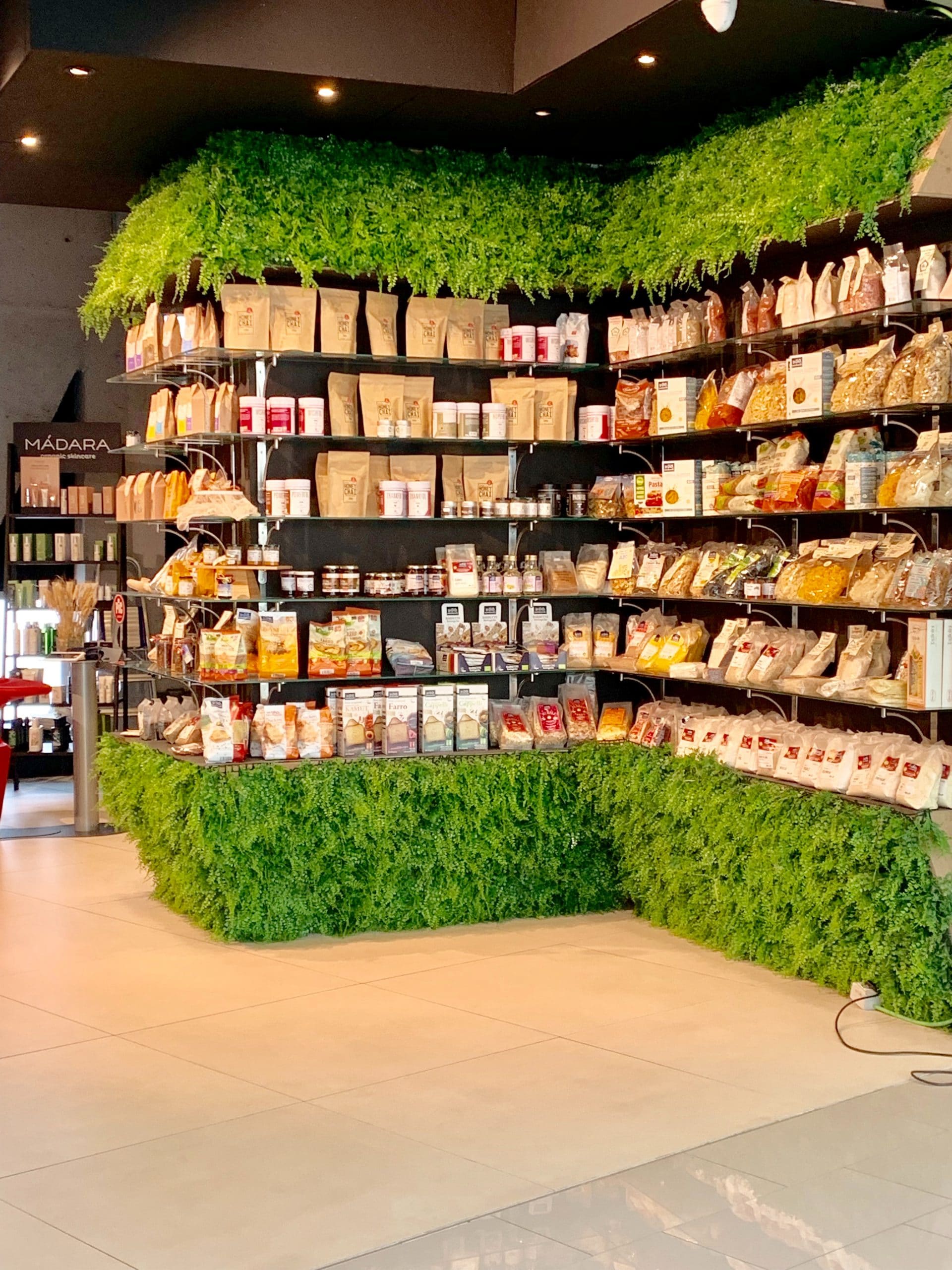
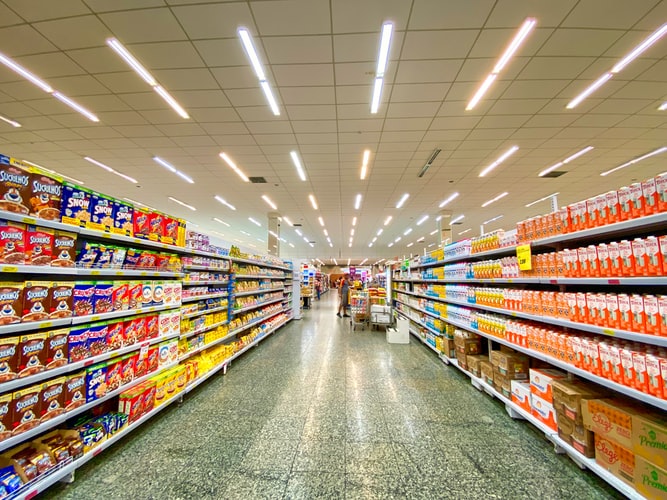
<img src="/assets/images/blog/lona-0BaEdsR8IRY-unsplash.jpg" alt="store shelves" width="300" />
</div>
</div>
<p><span style="text-decoration: underline;"><span style="font-size: 18px;">Table of Contents</span></span></p>
<p><span style="font-weight: 400; font-size: 18px;">My 5 Shopper Marketing Lessons:</span></p>
<ul>
<li aria-level="2" style="font-weight: 400;"><span style="font-weight: 400; font-size: 18px;"><a href="#moving-products">Moving products off of the store shelf is YOUR job, not the retailers. </a> </span></li>
<li aria-level="2" style="font-weight: 400;"><a href="#drive-regional-awareness"><span style="font-weight: 400; font-size: 18px;">Focus on Driving Regional Awareness + Trial</span></a></li>
<li aria-level="2" style="font-weight: 400;"><a href="#silver-bullet"><span style="font-weight: 400; font-size: 18px;">There is no silver bullet: marketing objective, brand stage, category, retailer, and budget considerations</span></a></li>
<li aria-level="2" style="font-weight: 400;"><a href="#budget-cash"><span style="font-weight: 400; font-size: 18px;">Launching a food brand isn’t cheap. Plan your budget and cash flow accordingly. </span></a></li>
<li aria-level="2" style="font-weight: 400;"><a href="#marketing-fundamentals"><span style="font-size: 18px;">Marketing fundamentals are KEY</span></a></li>
</ul>
<p><span style="font-weight: 400; font-size: 18px;">Shopping Marketing Advice:</span></p>
<ul>
<li aria-level="2" style="font-weight: 400;"><a href="#500-stores"><span style="font-weight: 400; font-size: 18px;">&lt;500 stores</span></a></li>
<li aria-level="2" style="font-weight: 400;"><a href="#500-1000-stores"><span style="font-weight: 400; font-size: 18px;">500-1000 stores</span></a></li>
<li aria-level="2" style="font-weight: 400;"><a href="#1000-stores"><span style="font-weight: 400; font-size: 18px;">1000+ stores</span></a></li>
<li aria-level="2"><a href="#master-list"><span style="font-weight: 400; font-size: 18px;">Master Shopping Marketing Tactic List</span></a></li>
</ul>
<p><a name="moving-products"></a></p>
<h2><span style="font-size: 24px;"><strong>Lesson #1: Moving products off of the store shelf is YOUR job, not the retailers.  </strong></span></h2>
<p><span style="font-size: 18px;">This is one of the dirty little secrets of this industry.  You have worked so hard to get your product ON the shelf, and it’s still your job to see the process through and get your product back OFF of the shelf as well.  It’s not the brokers’ job, it’s not your buyers’ job, it’s not even the retailers’ job.  It’s all yours!  Think of it this way: you are renting space within a store.  Your brand has probably already spent a lot of money to get on the shelf, but the investment doesn’t stop there.  </span></p>
<p><span style="font-size: 18px;"><span style="font-weight: 400;">You must ask yourself how much you are able to invest to keep your product on shelf. Set a velocity goal (units sold per store per week) - a good rule of thumb is above 3 u/s/w. You must establish a goal to evaluate if you’re successful and also to set your budget.  You can also reach out to your buyer asking for a category velocity hurdle.  Or, you can look at category sales data (try using a free tool like </span><a href="https://byzzer.com/"><span style="font-weight: 400;">Byzzer</span></a><span style="font-weight: 400;">) to find the average product’s velocity. POS or point of sale data from IRI, Nielsen, or SPINS can also give you an idea of what the median grocery velocities are in that category.</span></span></p>
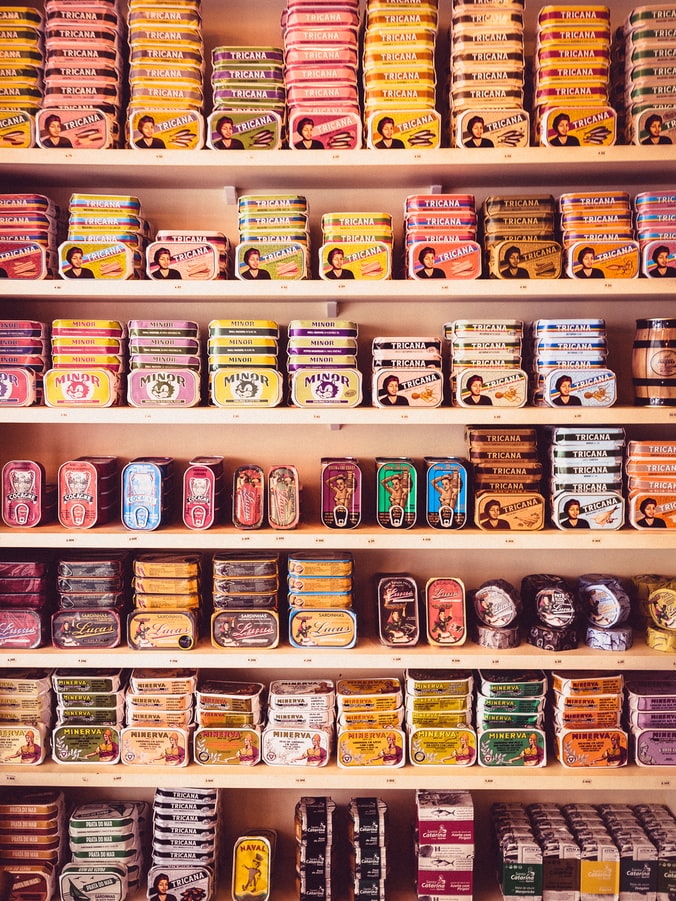
<p><img alt="stand out on shelf with marketing and sales support" class="fl-photo-img wp-image-2316 jetpack-lazy-image post-content-image" height="901" itemprop="image" src="/assets/images/blog/Shelf.jpg" title="stand out on shelf with marketing and sales support" width="676" /></p>
<p><a name="drive-regional-awareness"></a></p>
<h2><span style="font-size: 24px;"><strong>Lesson #2: Focus on Driving Regional Awareness + Trial</strong></span></h2>
<p><span style="font-weight: 400; font-size: 18px;">Driving awareness and trial is expensive and time consuming. Your efforts will also add up to be more, together. That’s why it’s best to build strong awareness and trial in one region at a time, starting first with where your target consumer is most likely located. You can declare success in a region when:</span></p>
<ul>
<li aria-level="1" style="font-weight: 400;"><span style="font-weight: 400; font-size: 18px;">Your consumer can easily find you at local stores</span></li>
<li aria-level="1" style="font-weight: 400;"><span style="font-weight: 400; font-size: 18px;">Your in-store velocities are great and your retailer buyer loves you</span></li>
<li aria-level="1" style="font-weight: 400;"><span style="font-weight: 400; font-size: 18px;">Your distributor rep also loves you because your product is moving briskly off their warehouse shelves </span></li>
</ul>
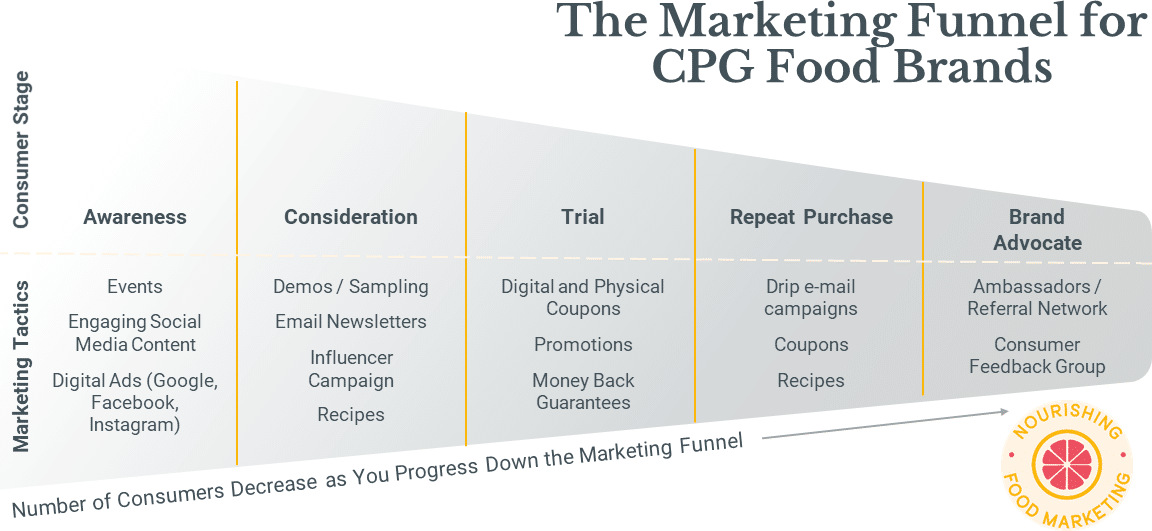
<p><span style="font-weight: 400; font-size: 18px;">OK, so what does awareness and trial even mean? Here’s the typical consumer journey</span></p>
<ol>
<li aria-level="1" style="font-weight: 400;"><span style="font-weight: 400; font-size: 18px;">Awareness: a consumer is curious about your CPG product.  They might think to themselves, what is this product and what can it do for me? </span></li>
<li aria-level="1" style="font-weight: 400;"><span style="font-weight: 400; font-size: 18px;">Consideration: when the consumer starts to imagine your product in their lives - will this fit into their routine? Does it meet their health goals? Would their families like the flavor? They think that your product benefits could be helpful to them.</span></li>
<li aria-level="1" style="font-weight: 400;"><span style="font-weight: 400; font-size: 18px;">Trial: when that consumer finally says to themselves, I need to go to the store and buy this product.  The consumer has learned enough about your product at this stage to be curious enough to actually try it!</span></li>
<li aria-level="1" style="font-weight: 400;"><span style="font-weight: 400; font-size: 18px;">Repeat Purchase: when someone loves your product so much that they purchase it over and over again.  </span></li>
<li aria-level="1" style="font-weight: 400;"><span style="font-weight: 400; font-size: 18px;">Brand Advocate: they talk about your product to their social networks.</span></li>
</ol>
<p><span style="font-weight: 400; font-size: 18px;">Moving a consumer to brand advocate is the ultimate goal for any business - these are your most profitable consumers!  They are not only repeating purchasers themselves, but they continue to bring awareness back to your brand by telling everyone they know to try your product!  These consumers will shout out your products on social media and tell all their friends about you and your CPG products.  Word of mouth really is the best way to get brand awareness but it can’t be planned for.</span></p>
<p><span style="font-weight: 400; font-size: 18px;">Concretely, here are some tactics to consider at each stage of the funnel:</span></p>
<p><img alt="Consumer Marketing Funnel Featured Image Logo" class="fl-photo-img wp-image-2159 jetpack-lazy-image post-content-image" height="369" itemprop="image" src="/assets/images/blog/Marketing-Funnel-Featured-Image-Logo.png" title="Marketing Funnel Featured Image Logo" width="800" />
<a name="silver-bullet"></a></p>
<p><a name="prioritizing-tactics"></a></p>
<h2><span style="font-size: 24px;"><strong>Lesson #3: There is no silver bullet </strong></span></h2>
<p><span style="font-weight: 400; font-size: 18px;">There is no one answer for a food business; every brand and business is different. Here are a few things to consider when developing your shopper marketing plan: </span></p>
<ul>
<li aria-level="1" style="font-weight: 400;"><span style="font-size: 18px;"><span style="font-weight: 400;"><span style="text-decoration: underline;">Marketing Objective</span> - Do you have a brand new product category that consumers need to be educated about? Then you should invest a lot more in the awareness stage of the shopper marketing funnel.  Educate them about your product </span><b>PLUS </b><span style="font-weight: 400;">what your benefit so they understand how you might fit into their lifestyle.  Are you trying to get the consumer to switch from another brand to your brand?  In this case, you would want to put more of your marketing budget into the trial stage because they are already standing by your shelf.  It’s your job to get them to purchase your CPG product.</span></span></li>
<li aria-level="1" style="font-weight: 400;"><span style="font-weight: 400; font-size: 18px;"><span style="text-decoration: underline;">Brand Stage</span> - How much brand equity do you have? If you’re an early stage brand and consumers don’t know who you are, you’ll need to do more awareness driving. If you’re later stage and are entering a new retailer, you may be able to jump to step #2 (driving trial). It all depends on how much brand recognition you have. </span></li>
<li aria-level="1" style="font-weight: 400;"><span style="font-weight: 400; font-size: 18px;"><span style="text-decoration: underline;">Category</span> - What do consumers most care about? What are your competitors doing?  If you’re in a price-competitive category like grains, increase your grocery velocities by focusing your budget on trial (couponing and promos/rebates).  But, if your consumers’ primary purchasing decision is taste and flavor, as in ready-to-drink beverages, consider spending more of your budget on getting that shelf talker at the retailer.  Take note of what your competitors are doing in the category too and plan appropriately. </span></li>
<li aria-level="1" style="font-weight: 400;"><span style="font-weight: 400; font-size: 18px;"><span style="text-decoration: underline;">Retailer</span> - What trade and shopper marketing programs are available to you? Every retailer has these, some are really expensive but others can be extremely effective. For early stage brands, promos should be a top tactic for you to consider. They demonstrate to the retailer that you’re supporting your product in their stores. Many retailers now have e-commerce sampling programs that are very cost effective. </span></li>
<li aria-level="1" style="font-weight: 400;"><span style="font-weight: 400; font-size: 18px;"><span style="text-decoration: underline;">Budget</span> - what can you afford? What can your product margins support? It doesn’t make sense to get distribution in 100 stores if you don’t have the budget to support those stores. Instead, focus on 25 stores and grow slowly from there.</span></li>
</ul>
<p><a name="budget-cash"></a></p>
<h2><span style="font-size: 24px;"><strong>Lesson #4: Launching a food brand isn’t cheap. Plan your budget and cash flow accordingly. </strong></span></h2>
<p><span style="font-size: 18px;"><span style="font-weight: 400;">If you have a new brand or product, you should be setting aside 5-20% of your wholesale sales for marketing on top of trade promos for at least the first </span><b><i>and </i></b><span style="font-weight: 400;">second years in business.  If  your product isn’t moving off the shelf, you will lose that shelf space.  You have worked so hard and spent so much to get the shelf space and you don’t want to lose it over poor marketing support.  Plan for this investment in your budget from the very beginning. Distribution is the biggest driver of sales, but this won’t help you if you continually gain and lose distribution because your product isn’t moving off shelves.  Most brands aren’t profitable in the first two years of business - you’re brand building.  </span></span></p>
<p><a name="marketing-fundamentals"></a></p>
<p><a name="prioritizing-tactics"></a></p>
<h2><span style="font-size: 24px;"><strong>Lesson #5: </strong><strong>Marketing fundamentals are KEY</strong></span></h2>
<p><span style="font-weight: 400; font-size: 18px;">It won’t matter how much you spend on shopper marketing if you don’t have these fundamentals down: </span></p>
<ul>
<li aria-level="1" style="font-weight: 400;"><span style="font-weight: 400; font-size: 18px;">You must have more than 1 SKU and you must have the right flavors.  Your SKUs will create a brand block so consumers can actually find you. Are your flavors incremental to each other? It’s better to have a Butter flavor and a Chili flavor instead of a Butter flavor and Truffle Butter flavor - you’ll reach more consumers. </span></li>
<li aria-level="1" style="font-weight: 400;"><span style="font-weight: 400; font-size: 18px;">You must have a strong consumer value (price compared to benefit).  If you are premium priced, you need to communicate strongly why you are worth that extra cost. </span></li>
<li aria-level="1" style="font-weight: 400;"><span style="font-weight: 400; font-size: 18px;">Your packaging has to clearly communicate why you’re better than all the other products around you.  Your product must communicate this at 6 feet (eye catching), 3 feet (peak interest), and 1 feet (benefits).  I’ve seen double-digit velocity jumps for brands that have gone through packaging refreshes.  So trust me when I say, packaging matters! </span></li>
</ul>
<h2><span style="font-size: 32px;"><strong>SHOPPER MARKETING TACTICS</strong></span></h2>
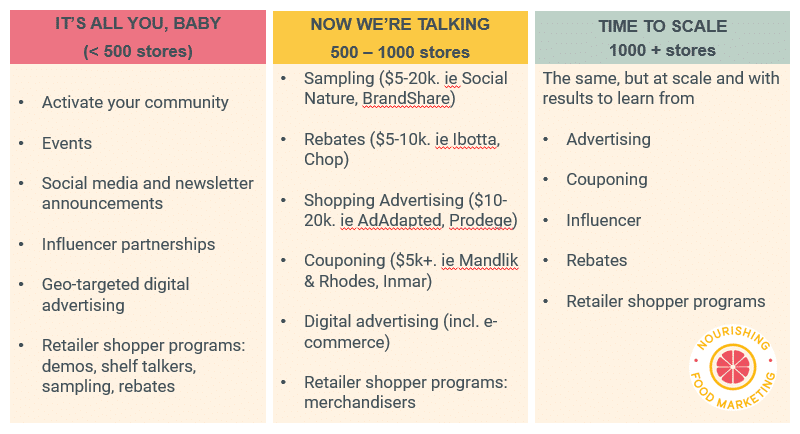
<p><span style="font-weight: 400; font-size: 18px;">When you increase the number of stores you’re in, that typically means you have more sales and more money to work with.  Having more money = being able to do more shopper marketing things.  Here are my best tips on what you should focus on depending on the stage of your CPG brand:</span></p>
<p><a name="500-stores"></a><br />
<span style="font-weight: 400; font-size: 18px;"><span style="text-decoration: underline;">Less than 500 stores?</span> It’s all about YOU! You most likely have little to no money to work with and here are some things you can get started on right away.</span></p>
<ul>
<li aria-level="1" style="font-weight: 400;"><span style="font-weight: 400; font-size: 18px;">Activate your community </span></li>
<li aria-level="1" style="font-weight: 400;"><span style="font-weight: 400; font-size: 18px;">Events</span></li>
<li aria-level="1" style="font-weight: 400;"><span style="font-weight: 400; font-size: 18px;">Social media and newsletter announcements</span></li>
<li aria-level="1" style="font-weight: 400;"><span style="font-weight: 400; font-size: 18px;">Influencer Partnerships</span></li>
<li aria-level="1" style="font-weight: 400;"><span style="font-weight: 400; font-size: 18px;">Geo-Targeted digital advertising</span></li>
<li aria-level="1" style="font-weight: 400;"><span style="font-weight: 400; font-size: 18px;">Retailer shopper programs such as demos, shelf-talkers, sampling, and rebates</span></li>
</ul>
<p><a name="500-1000-stores"></a><span style="font-weight: 400; font-size: 18px;"><span style="text-decoration: underline;">500-1000 Stores?</span> Now we’re talking! You are at the stage where you have retailer programs available to you, and you can actually afford them.  Certain programs won’t work with you if you aren’t in enough stores, but that is no longer your concern once you’ve hit 500-1,000 stores.  Here are the things you can level up to at this stage in your shopper marketing.</span></p>
<ul>
<li aria-level="1" style="font-weight: 400;"><span style="font-weight: 400; font-size: 18px;">Sampling ($5-$20K Social Nature, Brandshare)</span></li>
<li aria-level="1" style="font-weight: 400;"><span style="font-weight: 400; font-size: 18px;">Rebates ($5-$10K Ibotta, Chop)</span></li>
<li aria-level="1" style="font-weight: 400;"><span style="font-weight: 400; font-size: 18px;">Shopping Advertising ($10-$20K AdAdapted, Prodege)</span></li>
<li aria-level="1" style="font-weight: 400;"><span style="font-weight: 400; font-size: 18px;">Couponing ($5K+ Mandlik &amp; Rhodes, Inmar)</span></li>
<li aria-level="1" style="font-weight: 400;"><span style="font-weight: 400; font-size: 18px;">Digital Advertising (including e-commerce)</span></li>
<li aria-level="1" style="font-weight: 400;"><span style="font-weight: 400; font-size: 18px;">Retailer shopper programs (merchandisers)</span></li>
</ul>
<p><span style="text-decoration: underline;"><a name="1000-stores"></a></span><span style="font-size: 18px;"><span style="text-decoration: underline;"><span style="font-weight: 400;">1,000 + Stores? </span></span>TIME TO SCALE! <span style="font-weight: 400;">There aren’t really new tactics here, but your costs go down which means you can</span> <span style="font-weight: 400;">double down on the tactics that work.  Use your results from the previous stages to figure out where you need to double down.  If it works, keep going for it! </span></span></p>
<ul>
<li aria-level="1" style="font-weight: 400;"><span style="font-weight: 400; font-size: 18px;">Advertising</span></li>
<li aria-level="1" style="font-weight: 400;"><span style="font-weight: 400; font-size: 18px;">Couponing</span></li>
<li aria-level="1" style="font-weight: 400;"><span style="font-weight: 400; font-size: 18px;">Influencer</span></li>
<li aria-level="1" style="font-weight: 400;"><span style="font-weight: 400; font-size: 18px;">Rebates</span></li>
<li aria-level="1" style="font-weight: 400;"><span style="font-weight: 400; font-size: 18px;">Retailer shopper programs</span></li>
</ul>
<p><a name="master-list"></a><br />
<span style="font-size: 18px;">In summary...</span></p>
<p><img alt="shopper marketing tactics" class="fl-photo-img wp-image-2507 jetpack-lazy-image post-content-image" height="434" itemprop="image" src="/assets/images/blog/Shopper-Marketing-Tactics.png" title="Shopper Marketing Tactics" width="800" /></p>
<p><a name="final-thoughts"></a></p>
<h2><span style="font-size: 28px;"><strong>Final Thoughts</strong></span></h2>
<p><span style="font-weight: 400; font-size: 18px;">I hope you have enjoyed the information on how to drive grocery velocity for your CPG brand.  Let me recap our five main lessons as you build your shopper marketing plan: </span></p>
<ul>
<li aria-level="1"><span style="font-size: 18px;">Moving products off of the store shelf is your job, not the retailers</span></li>
<li aria-level="1"><span style="font-size: 18px;">Drive Awareness + trial in your region</span></li>
<li aria-level="1"><span style="font-size: 18px;">There is no silver bullet</span></li>
<li aria-level="1"><span style="font-size: 18px;">Launching a food brand isn’t cheap</span></li>
<li aria-level="1"><span style="font-size: 18px;">Marketing Fundamentals are KEY</span></li>
</ul>
<p><span style="font-size: 18px;">If you remember these key points, you will be well on your way to scaling your business!</span><br />
<b></b></p>]]></content><author><name>Christie Lee</name></author><category term="brand-marketing" /><summary type="html"><![CDATA[Does your CPG brand have a solid strategy to move products off the grocery shelf? Most companies focus too much energy on getting a product ON the shelf but have zero clue how to sell it OFF the shelf once it gets there.  Most of the big retailers only give one chance for new brands to succeed, so having a solid plan in place is crucial to your product’s success.  Let me help you with those details. In this blog, you will learn how to think about building your shopper marketing plan and which tactics you should consider for your shopper marketing plan. Below you will find the 5 sales and marketing lessons I’ve learned throughout the years. And, don’t miss my money chart at the end for my framework on how to think about shopper marketing and the tactics that you should think about at every brand stage! Table of Contents My 5 Shopper Marketing Lessons: Moving products off of the store shelf is YOUR job, not the retailers.   Focus on Driving Regional Awareness + Trial There is no silver bullet: marketing objective, brand stage, category, retailer, and budget considerations Launching a food brand isn’t cheap. Plan your budget and cash flow accordingly. Marketing fundamentals are KEY Shopping Marketing Advice: &lt;500 stores 500-1000 stores 1000+ stores Master Shopping Marketing Tactic List Lesson #1: Moving products off of the store shelf is YOUR job, not the retailers.  This is one of the dirty little secrets of this industry.  You have worked so hard to get your product ON the shelf, and it’s still your job to see the process through and get your product back OFF of the shelf as well.  It’s not the brokers’ job, it’s not your buyers’ job, it’s not even the retailers’ job.  It’s all yours!  Think of it this way: you are renting space within a store.  Your brand has probably already spent a lot of money to get on the shelf, but the investment doesn’t stop there.   You must ask yourself how much you are able to invest to keep your product on shelf. Set a velocity goal (units sold per store per week) - a good rule of thumb is above 3 u/s/w. You must establish a goal to evaluate if you’re successful and also to set your budget.  You can also reach out to your buyer asking for a category velocity hurdle.  Or, you can look at category sales data (try using a free tool like Byzzer) to find the average product’s velocity. POS or point of sale data from IRI, Nielsen, or SPINS can also give you an idea of what the median grocery velocities are in that category. Lesson #2: Focus on Driving Regional Awareness + Trial Driving awareness and trial is expensive and time consuming. Your efforts will also add up to be more, together. That’s why it’s best to build strong awareness and trial in one region at a time, starting first with where your target consumer is most likely located. You can declare success in a region when: Your consumer can easily find you at local stores Your in-store velocities are great and your retailer buyer loves you Your distributor rep also loves you because your product is moving briskly off their warehouse shelves  OK, so what does awareness and trial even mean? Here’s the typical consumer journey Awareness: a consumer is curious about your CPG product.  They might think to themselves, what is this product and what can it do for me?  Consideration: when the consumer starts to imagine your product in their lives - will this fit into their routine? Does it meet their health goals? Would their families like the flavor? They think that your product benefits could be helpful to them. Trial: when that consumer finally says to themselves, I need to go to the store and buy this product.  The consumer has learned enough about your product at this stage to be curious enough to actually try it! Repeat Purchase: when someone loves your product so much that they purchase it over and over again.   Brand Advocate: they talk about your product to their social networks. Moving a consumer to brand advocate is the ultimate goal for any business - these are your most profitable consumers!  They are not only repeating purchasers themselves, but they continue to bring awareness back to your brand by telling everyone they know to try your product!  These consumers will shout out your products on social media and tell all their friends about you and your CPG products.  Word of mouth really is the best way to get brand awareness but it can’t be planned for. Concretely, here are some tactics to consider at each stage of the funnel: Lesson #3: There is no silver bullet There is no one answer for a food business; every brand and business is different. Here are a few things to consider when developing your shopper marketing plan:  Marketing Objective - Do you have a brand new product category that consumers need to be educated about? Then you should invest a lot more in the awareness stage of the shopper marketing funnel.  Educate them about your product PLUS what your benefit so they understand how you might fit into their lifestyle.  Are you trying to get the consumer to switch from another brand to your brand?  In this case, you would want to put more of your marketing budget into the trial stage because they are already standing by your shelf.  It’s your job to get them to purchase your CPG product. Brand Stage - How much brand equity do you have? If you’re an early stage brand and consumers don’t know who you are, you’ll need to do more awareness driving. If you’re later stage and are entering a new retailer, you may be able to jump to step #2 (driving trial). It all depends on how much brand recognition you have.  Category - What do consumers most care about? What are your competitors doing?  If you’re in a price-competitive category like grains, increase your grocery velocities by focusing your budget on trial (couponing and promos/rebates).  But, if your consumers’ primary purchasing decision is taste and flavor, as in ready-to-drink beverages, consider spending more of your budget on getting that shelf talker at the retailer.  Take note of what your competitors are doing in the category too and plan appropriately.  Retailer - What trade and shopper marketing programs are available to you? Every retailer has these, some are really expensive but others can be extremely effective. For early stage brands, promos should be a top tactic for you to consider. They demonstrate to the retailer that you’re supporting your product in their stores. Many retailers now have e-commerce sampling programs that are very cost effective.  Budget - what can you afford? What can your product margins support? It doesn’t make sense to get distribution in 100 stores if you don’t have the budget to support those stores. Instead, focus on 25 stores and grow slowly from there. Lesson #4: Launching a food brand isn’t cheap. Plan your budget and cash flow accordingly. If you have a new brand or product, you should be setting aside 5-20% of your wholesale sales for marketing on top of trade promos for at least the first and second years in business.  If  your product isn’t moving off the shelf, you will lose that shelf space.  You have worked so hard and spent so much to get the shelf space and you don’t want to lose it over poor marketing support.  Plan for this investment in your budget from the very beginning. Distribution is the biggest driver of sales, but this won’t help you if you continually gain and lose distribution because your product isn’t moving off shelves.  Most brands aren’t profitable in the first two years of business - you’re brand building.   Lesson #5: Marketing fundamentals are KEY It won’t matter how much you spend on shopper marketing if you don’t have these fundamentals down:  You must have more than 1 SKU and you must have the right flavors.  Your SKUs will create a brand block so consumers can actually find you. Are your flavors incremental to each other? It’s better to have a Butter flavor and a Chili flavor instead of a Butter flavor and Truffle Butter flavor - you’ll reach more consumers.  You must have a strong consumer value (price compared to benefit).  If you are premium priced, you need to communicate strongly why you are worth that extra cost.  Your packaging has to clearly communicate why you’re better than all the other products around you.  Your product must communicate this at 6 feet (eye catching), 3 feet (peak interest), and 1 feet (benefits).  I’ve seen double-digit velocity jumps for brands that have gone through packaging refreshes.  So trust me when I say, packaging matters! SHOPPER MARKETING TACTICS When you increase the number of stores you’re in, that typically means you have more sales and more money to work with.  Having more money = being able to do more shopper marketing things.  Here are my best tips on what you should focus on depending on the stage of your CPG brand: Less than 500 stores? It’s all about YOU! You most likely have little to no money to work with and here are some things you can get started on right away. Activate your community  Events Social media and newsletter announcements Influencer Partnerships Geo-Targeted digital advertising Retailer shopper programs such as demos, shelf-talkers, sampling, and rebates 500-1000 Stores? Now we’re talking! You are at the stage where you have retailer programs available to you, and you can actually afford them.  Certain programs won’t work with you if you aren’t in enough stores, but that is no longer your concern once you’ve hit 500-1,000 stores.  Here are the things you can level up to at this stage in your shopper marketing. Sampling ($5-$20K Social Nature, Brandshare) Rebates ($5-$10K Ibotta, Chop) Shopping Advertising ($10-$20K AdAdapted, Prodege) Couponing ($5K+ Mandlik &amp; Rhodes, Inmar) Digital Advertising (including e-commerce) Retailer shopper programs (merchandisers) 1,000 + Stores? TIME TO SCALE! There aren’t really new tactics here, but your costs go down which means you can double down on the tactics that work.  Use your results from the previous stages to figure out where you need to double down.  If it works, keep going for it!  Advertising Couponing Influencer Rebates Retailer shopper programs In summary... Final Thoughts I hope you have enjoyed the information on how to drive grocery velocity for your CPG brand.  Let me recap our five main lessons as you build your shopper marketing plan:  Moving products off of the store shelf is your job, not the retailers Drive Awareness + trial in your region There is no silver bullet Launching a food brand isn’t cheap Marketing Fundamentals are KEY If you remember these key points, you will be well on your way to scaling your business!]]></summary><media:thumbnail xmlns:media="http://search.yahoo.com/mrss/" url="https://www.nourishingfoodmarketing.com/assets/images/blog/lona-0BaEdsR8IRY-unsplash.jpg" /><media:content medium="image" url="https://www.nourishingfoodmarketing.com/assets/images/blog/lona-0BaEdsR8IRY-unsplash.jpg" xmlns:media="http://search.yahoo.com/mrss/" /></entry><entry><title type="html">Building Your CPG Brand’s Go-To-Market Plan</title><link href="https://www.nourishingfoodmarketing.com/2021/03/23/go-to-market/" rel="alternate" type="text/html" title="Building Your CPG Brand’s Go-To-Market Plan" /><published>2021-03-23T23:26:22+00:00</published><updated>2021-03-23T23:26:22+00:00</updated><id>https://www.nourishingfoodmarketing.com/2021/03/23/go-to-market</id><content type="html" xml:base="https://www.nourishingfoodmarketing.com/2021/03/23/go-to-market/"><![CDATA[<p><img src="/assets/images/blog/lona-0BaEdsR8IRY-unsplash-scaled.jpg" alt="Building Your CPG Brand’s Go-To-Market Plan" class="post-featured-image" /></p>
<p>2020 dramatically changed the retail landscape - especially for food and beverage brands. As we all looked to practice social distancing and sheltering at home, consumers’ shopping behaviors changed suddenly, drastically, and permanently. We are opting for contactless shopping experiences, buying groceries online more than ever, and if we are going in-store, we’re not browsing for new products. Did you know: online grocery sales have grown by nearly<a href="https://www.emarketer.com/content/online-grocery-sales-will-increase-by-nearly-53-this-year"> 53 percent</a> year over year in 2020?</p>
<p>In this new disrupted retail environment, it’s become increasingly important for food and beverage brands to have a strong, well-developed go-to-market strategy to ensure they are choosing the right channel to sell their products in. Is it better to go for a brand to sell at natural retailers, which takes relatively longer but more market share, or online, a fast-moving channel that is capturing more and more market share?</p>
<p>The answer to this question depends on your business objectives. Do you want to launch quickly, so you can be first-to-market? Do you want to have high revenue or high profit? Do you want to learn about your consumers quickly and iterate your product based on their feedback?</p>
<p><img alt="store shelves" class="fl-photo-img wp-image-2467 jetpack-lazy-image post-content-image" height="1067" itemprop="image" src="/assets/images/blog/lona-0BaEdsR8IRY-unsplash-scaled.jpg" title="store shelves" width="800" /></p>
<p><a name="amazon"></a><br />
With that lens, we’ll explore the strengths and weaknesses of the three sales channels that are most commonly evaluated by CPG brands:</p>
<ul>
<li><a href="#amazon">Amazon Seller Central</a></li>
<li><a href="#DTC">Direct-To-Consumers (DTC)</a></li>
<li><a href="#natural">Natural Brick &amp; Mortar Retailers</a></li>
<li><a href="#comparing-channels">Comparing Channels</a></li>
</ul>
<h3 class="fl-heading">
<span class="fl-heading-text">Amazon Seller Central</span>
</h3>
<p style="text-align: center;"><b>Amazon Summary</b></p>
<table>
<tbody>
<tr>
<td></td>
<td><b>Amazon Seller Central</b></td>
<td><b>Amazon Vendor Central</b></td>
</tr>
<tr>
<td><span style="font-weight: 400;">The Basics</span></td>
<td><span style="font-weight: 400;">Manufacturer-led portal to sell your products to Amazon customers</span></td>
<td>
<ul>
<li aria-level="1" style="font-weight: 400;"><span style="font-weight: 400;">&gt;$10M in annual sales unless you’re part of LaunchPad</span></li>
<li aria-level="1" style="font-weight: 400;"><span style="font-weight: 400;">Wholesale sales - sell at a wholesale price</span></li>
</ul>
</td>
</tr>
<tr>
<td><span style="font-weight: 400;">Pricing</span></td>
<td>
<ul>
<li aria-level="1" style="font-weight: 400;"><span style="font-weight: 400;">Manufacturer-controlled retail pricing </span></li>
<li aria-level="1" style="font-weight: 400;"><span style="font-weight: 400;">Promotions available </span></li>
</ul>
</td>
<td><span style="font-weight: 400;">Amazon-controlled retail pricing and promotions </span></td>
</tr>
<tr>
<td><span style="font-weight: 400;">Logistics </span></td>
<td><span style="font-weight: 400;">Fulfilled by Merchant (FBM) or Fulfilled by Amazon (FBA)</span></td>
<td><span style="font-weight: 400;">Fulfilled by Amazon (FBA)</span></td>
</tr>
<tr>
<td><span style="font-weight: 400;">Cost Structure</span></td>
<td><span style="font-weight: 400;">15% commission plus FBA costs</span></td>
<td><span style="font-weight: 400;">Wholesale pricing (mandatory 7-18% for marketing co-op + damage allowance) </span></td>
</tr>
</tbody>
</table>
<p><span style="font-weight: 400;">Over the past several years, Amazon has proven that it is the future of retail. Amazon’s customer-first business model and positive user experience have led to almost </span><a href="https://www.repricerexpress.com/amazon-statistics/#:~:text=4.,of%20Amazon's%20total%20US%20audience."><span style="font-weight: 400;">95 million</span></a><span style="font-weight: 400;"> Americans holding a Prime Membership. According to a study by </span><a href="https://www.statista.com/statistics/788109/amazon-retail-market-share-usa/"><span style="font-weight: 400;">Statista</span></a><span style="font-weight: 400;">, Amazon was responsible for 45% of the United States’ e-commerce spending in 2019. Amazon is also the first place online shoppers visit to look for a product that they want to buy. That’s a long way of saying that there’s an excellent chance that your brand’s target audience will be on Amazon. </span></p>
<p><span style="font-weight: 400;">Amazon has a keyword-driven algorithm, which means that your copy is essential. Amazon offers a great way to showcase how your brand and products differ from competitors and what sets you apart. It’s also a great way to build brand recognition and attract new consumers who are already looking for a product just like yours. </span></p>
<p><strong>Amazon’s strengths:</strong></p>
<ul>
<li aria-level="1" style="font-weight: 400;"><span style="font-weight: 400;">Fulfillment by Amazon makes logistics and shipping simple</span></li>
<li aria-level="1" style="font-weight: 400;"><span style="font-weight: 400;">There are lots of ecosystem partners to help you, from running your Amazon digital marketing to optimizing your product listing</span></li>
<li aria-level="1" style="font-weight: 400;"><span style="font-weight: 400;">Huge market share</span></li>
</ul>
<p><strong>Amazon’s downsides:</strong></p>
<ul>
<li aria-level="1" style="font-weight: 400;"><span style="font-weight: 400;">Lots of product competition</span></li>
<li aria-level="1" style="font-weight: 400;"><span style="font-weight: 400;">Amazon shares very little consumer data with sellers</span></li>
<li aria-level="1" style="font-weight: 400;"><span style="font-weight: 400;">To have your product on page 1 of a search term, you have to invest in its digital marketing platform, Amazon Marketing Services (AMS)<a name="DTC"></a></span></li>
</ul>
<h3 class="fl-heading">
<span class="fl-heading-text">Direct to Consumer (DTC)</span>
</h3>
<h4 style="text-align: center;"><b>Direct to Consumer Summary</b></h4>
<table>
<tbody>
<tr>
<td><span style="font-weight: 400;">The Basics </span></td>
<td>
<ul>
<li aria-level="1" style="font-weight: 400;"><span style="font-weight: 400;">Sell on your own website</span></li>
<li aria-level="1" style="font-weight: 400;"><span style="font-weight: 400;">Ability to offer wider product availability, limited edition products, custom variety packs</span></li>
</ul>
</td>
</tr>
<tr>
<td><span style="font-weight: 400;">Pricing</span></td>
<td><span style="font-weight: 400;">At your discretion, along with promotions</span></td>
</tr>
<tr>
<td><span style="font-weight: 400;">Logistics</span></td>
<td><span style="font-weight: 400;">Self-fulfill or work with a third-party fulfillment company</span></td>
</tr>
<tr>
<td><span style="font-weight: 400;">Cost Structure</span></td>
<td><span style="font-weight: 400;">Low marketplace fees (Shopify is 2.9% + $0.30)</span></td>
</tr>
</tbody>
</table>
<p><span style="font-weight: 400;">Many new and emerging CPG brands choose to go with the direct-to-consumer (DTC) option when they first go to market. By building their own e-commerce enabled website (Shopify being the most common platform), brands are able to iterate quickly on product pricing, positioning, and brand communications. This rich consumer data can help you make better business decisions and smarter marketing decisions. </span></p>
<p><strong>DTC’s strengths:</strong></p>
<ul>
<li aria-level="1" style="font-weight: 400;"><span style="font-weight: 400;">Complete ownership of the consumer relationship and data</span></li>
<li aria-level="1" style="font-weight: 400;"><span style="font-weight: 400;">Test and learn quickly with consumer research</span></li>
<li aria-level="1" style="font-weight: 400;"><span style="font-weight: 400;">Strong storytelling capability on the website and social media</span></li>
</ul>
<p><strong>DTC’s downsides:</strong></p>
<ul>
<li aria-level="1" style="font-weight: 400;"><span style="font-weight: 400;">High set-up costs (website, social media, email automation)</span></li>
<li aria-level="1" style="font-weight: 400;"><span style="font-weight: 400;">More external partners to manage (customer service, fulfillment, warehousing)</span></li>
<li aria-level="1" style="font-weight: 400;"><span style="font-weight: 400;">Likely high customer acquisition costs through digital marketing, particularly with Facebook’s recent iOS 14 changes</span></li>
</ul>
<p><span style="font-weight: 400;">So, when does it make sense to go DTC? When you’ve got the funding to pay for digital marketing or you’re ready to get scrappy and creative to let consumers know about your brand! (Of course, you also have to consider your product category and if the value to weight ratio works for shipping your products.)</span><br />
<a name="natural"></a></p>
<h3 class="fl-heading">
<span class="fl-heading-text">National Retailers </span>
</h3>
<h4 style="text-align: center;"><b>National Natural Retailer Summary</b></h4>
<table>
<tbody>
<tr>
<td><span style="font-weight: 400;">The Basics</span></td>
<td>
<ul>
<li aria-level="1" style="font-weight: 400;"><span style="font-weight: 400;">Sell at wholesale to natural retailers</span></li>
<li aria-level="1" style="font-weight: 400;"><span style="font-weight: 400;">At scale, requires distributors and typically brokers</span></li>
</ul>
</td>
</tr>
<tr>
<td><span style="font-weight: 400;">Pricing </span></td>
<td>
<ul>
<li aria-level="1" style="font-weight: 400;"><span style="font-weight: 400;">Manufacturer-controlled retail pricing </span></li>
<li aria-level="1" style="font-weight: 400;"><span style="font-weight: 400;">Promotions available</span></li>
</ul>
</td>
</tr>
<tr>
<td><span style="font-weight: 400;">Logistics</span></td>
<td><span style="font-weight: 400;">Delivered of FOB (Free on Board - distributor/retailer picks up)</span></td>
</tr>
<tr>
<td><span style="font-weight: 400;">Cost Structure</span></td>
<td>
<ul>
<li aria-level="1" style="font-weight: 400;"><span style="font-weight: 400;">35-45% retailer margins</span></li>
<li aria-level="1" style="font-weight: 400;"><span style="font-weight: 400;">20-25% distributor fees</span></li>
<li aria-level="1" style="font-weight: 400;"><span style="font-weight: 400;">5% broker fees </span></li>
</ul>
</td>
</tr>
</tbody>
</table>
<p><span style="font-weight: 400;">Now it’s time to talk about partnering with a brick-and-mortar natural retailer. This could be your local natural food co-op, a several-store regional chain, or a national chain like Whole Foods. </span></p>
<p><strong>Natural Retailer strengths:</strong></p>
<ul>
<li aria-level="1" style="font-weight: 400;"><span style="font-weight: 400;">Most scalable option, with ~80% of food and beverage still being sold in stores</span></li>
<li aria-level="1" style="font-weight: 400;"><span style="font-weight: 400;">Once you are selling direct to 20+ stores in a region, you’ll have to on-board a distributor like UNFI or KeHe to grow. </span></li>
<li aria-level="1" style="font-weight: 400;"><span style="font-weight: 400;">Strong external partners (ie, brokers and fractional CSO/CMOs) to help you build your business</span></li>
</ul>
<p><strong>Natural Retailer downsides:</strong></p>
<ul>
<li aria-level="1" style="font-weight: 400;"><span style="font-weight: 400;">Very long timelines to get your product on-shelf: 6-12 months</span></li>
<li aria-level="1" style="font-weight: 400;"><span style="font-weight: 400;">Requires strong sales and marketing support, from promotions to an online community, to have your products be bought once they’re on-shelf</span></li>
<li aria-level="1" style="font-weight: 400;"><span style="font-weight: 400;">Small brands have a difficult time getting any sales data (either velocity or consumer demographic information)</span></li>
<p><a name="comparing-channels"></a>
</p></ul>
<h3 class="fl-heading">
<span class="fl-heading-text">Comparing these Channels</span>
</h3>
<p><span style="font-weight: 400;">To help you compare and contrast these sales channels, here’s an analysis that looks at how well each channel fits potential business objectives (each row).</span></p>
<table>
<tbody>
<tr>
<td><b>Key:</b>
<ul>
<li aria-level="1" style="font-weight: 400;"><span style="font-weight: 400;">-</span><span style="font-weight: 400;"> = worst</span></li>
<li aria-level="1" style="font-weight: 400;"><span style="font-weight: 400;">✓✓ = best</span></li>
</ul>
</td>
<td><b>National Natural Retailers</b></td>
<td><b>Amazon </b></td>
<td><b>Direct to Consumer</b></td>
</tr>
<tr>
<td><span style="font-weight: 400;">Speed to Market</span></td>
<td style="text-align: center;"><span style="font-weight: 400;">-</span></td>
<td style="text-align: center;"><span style="font-weight: 400;">✓</span></td>
<td style="text-align: center;"><span style="font-weight: 400;">✓✓</span></td>
</tr>
<tr>
<td><span style="font-weight: 400;">Management complexity</span></td>
<td style="text-align: center;"><span style="font-weight: 400;">✓</span></td>
<td style="text-align: center;"><span style="font-weight: 400;">✓✓</span></td>
<td style="text-align: center;"><span style="font-weight: 400;">-</span></td>
</tr>
<tr>
<td><span style="font-weight: 400;">Cost to launch</span></td>
<td style="text-align: center;"><span style="font-weight: 400;">-</span></td>
<td style="text-align: center;"><span style="font-weight: 400;">✓</span></td>
<td style="text-align: center;"><span style="font-weight: 400;">-</span></td>
</tr>
<tr>
<td><span style="font-weight: 400;">Consumer learning</span></td>
<td style="text-align: center;"><span style="font-weight: 400;">-</span></td>
<td style="text-align: center;"><span style="font-weight: 400;">✓✓</span></td>
</tr>
<tr>
<td><span style="font-weight: 400;">Barriers to entry</span></td>
<td style="text-align: center;"><span style="font-weight: 400;">-</span></td>
<td style="text-align: center;"><span style="font-weight: 400;">✓</span></td>
<td style="text-align: center;"><span style="font-weight: 400;">✓✓</span></td>
</tr>
<tr>
<td><span style="font-weight: 400;">Potential to outsource management</span></td>
<td style="text-align: center;"><span style="font-weight: 400;">✓</span></td>
<td style="text-align: center;"><span style="font-weight: 400;">✓✓</span></td>
</tr>
<tr>
<td><span style="font-weight: 400;">Size of prize</span></td>
<td style="text-align: center;"><span style="font-weight: 400;">✓✓</span></td>
<td style="text-align: center;"><span style="font-weight: 400;">✓</span></td>
</tr>
</tbody>
</table>
<p><span style="font-weight: 400;">Take your time considering which channel is the right choice for your brand and your product! Your go-to-market strategy will determine how you deploy your most precious resources (time and money), so it’s important that you understand how well each channel fits your business objectives. This decision is critical to your brand’s success. </span></p>]]></content><author><name>Christie Lee</name></author><category term="ecommerce" /><summary type="html"><![CDATA[]]></summary><media:thumbnail xmlns:media="http://search.yahoo.com/mrss/" url="https://www.nourishingfoodmarketing.com/assets/images/blog/lona-0BaEdsR8IRY-unsplash-scaled.jpg" /><media:content medium="image" url="https://www.nourishingfoodmarketing.com/assets/images/blog/lona-0BaEdsR8IRY-unsplash-scaled.jpg" xmlns:media="http://search.yahoo.com/mrss/" /></entry><entry><title type="html">Discovering the Marketing Tactics that Will Help You Drive Sales Velocities</title><link href="https://www.nourishingfoodmarketing.com/2021/03/16/discovering-the-marketing-tactics-that-will-help-you-drive-sales-velocities/" rel="alternate" type="text/html" title="Discovering the Marketing Tactics that Will Help You Drive Sales Velocities" /><published>2021-03-16T10:20:07+00:00</published><updated>2021-03-16T10:20:07+00:00</updated><id>https://www.nourishingfoodmarketing.com/2021/03/16/discovering-the-marketing-tactics-that-will-help-you-drive-sales-velocities</id><content type="html" xml:base="https://www.nourishingfoodmarketing.com/2021/03/16/discovering-the-marketing-tactics-that-will-help-you-drive-sales-velocities/"><![CDATA[<p><img src="/assets/images/blog/imants-kaziluns-k2ojxtdaslQ-unsplash.jpg" alt="Discovering the Marketing Tactics that Will Help You Drive Sales Velocities" class="post-featured-image" /></p>

<p><a name="move-product"></a><span style="text-decoration: underline;"><span style="font-size: 18px;">Table of Contents</span></span></p>
<ul>
<li style="list-style-type: none;">
<ul>
<li><span style="font-size: 18px;"><a href="#move-product">How to move product off shelves and into people's carts</a></span></li>
<li><span style="font-size: 18px;"><a href="#higher-cost">Higher absolute cost (but reasonable per unit moved) tactics</a></span></li>
<li><span style="font-size: 18px;"><a href="#all-you">"All you, baby" tactics</a></span></li>
<li><span style="font-size: 18px;"><a href="#retailer">Retailer-dependent tactics</a></span></li>
<li><span style="font-size: 18px;"><a href="#fundamentals">Don't forget the fundamentals!</a></span></li>
</ul>
</li>
</ul>
<h2><strong>How to move your products off shelves and into people’s carts</strong></h2>
<p>You’ve done step one - you’ve secured a distribution deal and your food and beverage product is finally going to be available in stores. Now comes the hard part: getting your product moving off the shelves! How do you get your product into people’s shopping carts and into their homes?</p>
<p>Before I answer that question, you need to ask yourself what your <a href="/2020/04/27/the-definitive-guide-to-creating-a-marketing-plan-for-food-and-beverage-brands/">business and marketing objectives</a> are. Are you trying to capture a completely new buyer? Are you trying to penetrate more households with your product? Are you trying to get consumers to switch from another brand to your brand? Your business objectives will determine your marketing objectives and in turn, help you choose the right marketing tactics to drive sales velocities.</p>
<figure class="aligncenter size-large"><img alt="" class="wp-image-2453 jetpack-lazy-image post-content-image" height="533" src="/assets/images/blog/imants-kaziluns-k2ojxtdaslQ-unsplash.jpg" width="800" /></figure>
<p><a name="higher-cost"></a><br />
When choosing the right marketing tactics to drive velocities, you’ll first want to first test and learn. Try different approaches, see which ones work best for your brand, and invest in scaling them. Choosing the right marketing tactics for your product will play a large role in moving it off the shelf and into your consumers’ carts.</p>
<p>There are four categories of marketing tactics that I typically recommend to new and emerging CPG brands. Use your business objectives to determine which of these categories is the right choice for your brand.</p>
<p><strong>Higher absolute cost (but reasonable per unit moved) tactics</strong><br />
<a name="all-you"></a></p>
<ol>
<li><em>Coupons/Store Rewards Programs/Ibotta</em><strong> - </strong>Partnering with your retailer's loyalty programs, distributing coupons, or working with third-party rebate apps like Ibotta can help drive awareness of your product and encourage first-time buyers to try it at a discounted rate. These programs typically have a minimum buy-in cost between $10,000 and $30,000, and per-unit costs of $1-3 are a good option if you have the distribution to make them worth the high buy-in cost.</li>
</ol>
<ol start="2">
<li><em>Sampling Programs </em>-  Partnering with sampling programs like PinchMe and Brand Share are a great way to get your products in front of your target consumer. Sampling programs can be highly specific with their consumer targeting, so you know your product will be going to people in your identified audience. Sampling programs are another good option if you have the distribution to support it. These programs can cost anywhere between $0.50 to $2.00 to distribute depending on product size and weight, plus they typically have high minimums, usually between $5,000 - $10,000.</li>
</ol>
<p><strong>“All you, baby” tactics </strong></p>
<ol>
<li><em>Leverage your social media and email communities</em> - Your social media and email communities are already a fan of you and your product, so use your social channels and newsletter to announce your distributions and encourage your followers and subscribers to purchase your product at their local store. Give them tools to be your advocate too, like a giveaway for people who tag your product on social.</li>
</ol>
<ol start="2">
<li><em>Influencer partnerships </em> - Look for retailer fan accounts on social media (Costco and Whole Foods both have one) and see if there are any partnership opportunities to feature your product. This gets your product front and center for a new audience that is already shopping at your retailer. Similarly, you can work with influencers that are values-aligned and are based in the region your retailer is in. Their followers won't be 100% in your target geography, but it's still a good option!</li>
</ol>
<ol start="4">
<li><em>Leverage your personal network, friends, and family</em> - Get your friends and family to support you, both through purchases at their local store, but also by making sure your product is arranged on the shelves beautifully and is positioned to catch your consumers’ eyes.</li>
<li><em>Geo-targeted digital marketing</em> - Geo-targeted digital marketing is a great tool for awareness campaigns and letting a local audience know that your product is available in a store close to them. This tactic is especially great because it works across all budgets and allows you to target customers in a hyper-local area. You can also use geo-targeting campaigns to A/B test which landing pages and content resonates most with your audience.</li>
</ol>
<p><a name="retailer"></a></p>
<p><strong>Retailer-dependent tactics</strong></p>
<ol>
<li><em>Shelf tags</em> - Is your product first to market, local, or women-owned? Use shelf tags to call attention to these attributes and catch consumers’ eyes. Make sure your shelf tags grab attention from six feet away, are ready to read from one foot away, and drives the sale from zero feet away.</li>
</ol>
<p><a name="fundamentals"></a></p>
<ol start="2">
<li><em>Shopper marketing partnerships with your retailer</em> - Does your retailer offer sampling programs, have email or text campaigns, or do giveaways on their social channels? If so, ask your buyer who you should talk with to have your product can be featured through one of these channels. Some retailers charge for this type of marketing partnership, while others don't. If it's a paid program, ask for past results to make sure the ROI makes sense for you. This can be a great way to drive awareness and trial of your product.</li>
</ol>
<ol start="3">
<li><em>Merchandisers</em> - This can consist of floor shippers, counter displays, trays, etc. and it’s important to make sure that you’re making the best use of this retail space. You’re paying for it, so make sure your set-up is working for you and driving purchases.</li>
</ol>
<p><strong>Don’t forget the fundamentals! </strong></p>
<ol>
<li><em>Clear product positioning so that consumers know why they’re buying your product </em>- Consumers should have a clear understanding of why you are different from other products and what makes you special and sets you apart from competitors.</li>
</ol>
<ol start="2">
<li><em>Packaging that looks good and stands out on the shelf</em> - When you’re choosing packaging, make sure that it will help your product stand out in the categories that you're merchandised in. Consumers make purchasing decisions within four to six seconds, so it’s important that your product stands out on the shelf.</li>
</ol>
<ol start="3">
<li><em>Consistent messaging across all your assets</em> - Identify the one thing about your product you want consumers to know and make sure that messaging is consistent across all of your assets. Repeat, repeat, repeat - your consumers are not paying close attention to your marketing so you really have to say the same things, in different ways, across all of your marketing communications.</li>
</ol>
<p>As I mentioned above, your marketing tactics should support your marketing objectives and business objectives. It is critical that you define these before moving forward with any marketing tactic. As you A/B test various marketing tactics before determining which ones to invest in, make sure you’re tracking your results and understanding what they mean for your bottom line - you want to understand what you’re getting for your money!</p>]]></content><author><name>Christie Lee</name></author><category term="brand-marketing" /><summary type="html"><![CDATA[]]></summary><media:thumbnail xmlns:media="http://search.yahoo.com/mrss/" url="https://www.nourishingfoodmarketing.com/assets/images/blog/imants-kaziluns-k2ojxtdaslQ-unsplash.jpg" /><media:content medium="image" url="https://www.nourishingfoodmarketing.com/assets/images/blog/imants-kaziluns-k2ojxtdaslQ-unsplash.jpg" xmlns:media="http://search.yahoo.com/mrss/" /></entry><entry><title type="html">Top 5 Challenges Food Brands Face When Sourcing Ingredients</title><link href="https://www.nourishingfoodmarketing.com/2021/01/07/top-5-challenges-food-brands-face-when-sourcing-ingredients/" rel="alternate" type="text/html" title="Top 5 Challenges Food Brands Face When Sourcing Ingredients" /><published>2021-01-07T10:18:41+00:00</published><updated>2021-01-07T10:18:41+00:00</updated><id>https://www.nourishingfoodmarketing.com/2021/01/07/top-5-challenges-food-brands-face-when-sourcing-ingredients</id><content type="html" xml:base="https://www.nourishingfoodmarketing.com/2021/01/07/top-5-challenges-food-brands-face-when-sourcing-ingredients/"><![CDATA[<p><img src="/assets/images/blog/andrea-leon-vNrpgkrRtlk-unsplash-scaled.jpg" alt="Top 5 Challenges Food Brands Face When Sourcing Ingredients" class="post-featured-image" /></p>

<p><span style="font-weight: 400;">Last year, I asked several food CPG communities to participate in a consumer research survey to gain insight into how you think about your ingredient sourcing. Through this project with </span><a href="https://planetfwd.com/"><span style="font-weight: 400;">Planet FWD</span></a><span style="font-weight: 400;">, who is building a platform to connect regenerative, sustainable, and climate-friendly food producers to food and beverage brands who want to take a bite out of climate change, I sketched out the landscape of how small and large brands source ingredients and what your pain points are.</span></p>
<p><span style="font-weight: 400;">Over a series of 20 structured discovery interviews and a much broader survey of nearly 40 CPG brands, I was able to learn more about your challenges and struggles and how Planet FWD can help you meet those pain points. As a report back to the community and thank you for your participation in the survey, this blog post will dive into our insights and how consumer research can help you make business decisions.</span></p>
<p><span style="text-decoration: underline;"><span style="font-size: 18px;">Table of Contents</span></span></p>
<ul>
<li style="list-style-type: none;">
<ul>
<li><span style="font-size: 18px;"><a href="#small-brands">Small Brands (&lt;$1M in annual revenue) Struggle with Ingredient Sourcing</a></span></li>
<li><span style="font-size: 18px;"><a href="#sustainability-climate-impact">Brands Care About Their Products’ Sustainability and Climate Impact</a></span></li>
<li><span style="font-size: 18px;"><a href="#sustainability-data">Brands Aren’t Using Quantitative Sustainability Data</a></span></li>
<li><span style="font-size: 18px;"><a href="#trust-reliability">Trust and Reliability are Table Stakes in Ingredient Sourcing<br />
</a></span></li>
<li><span style="font-size: 18px;"><a href="#cost-competitive">Cost-competitive ingredients and proven consumer demand are key brand motivators for addressing climate impact</a></span></li>
<li><span style="font-size: 18px;"><a href="#whats-next">What's next?</a></span></li>
</ul>
</li>
</ul>
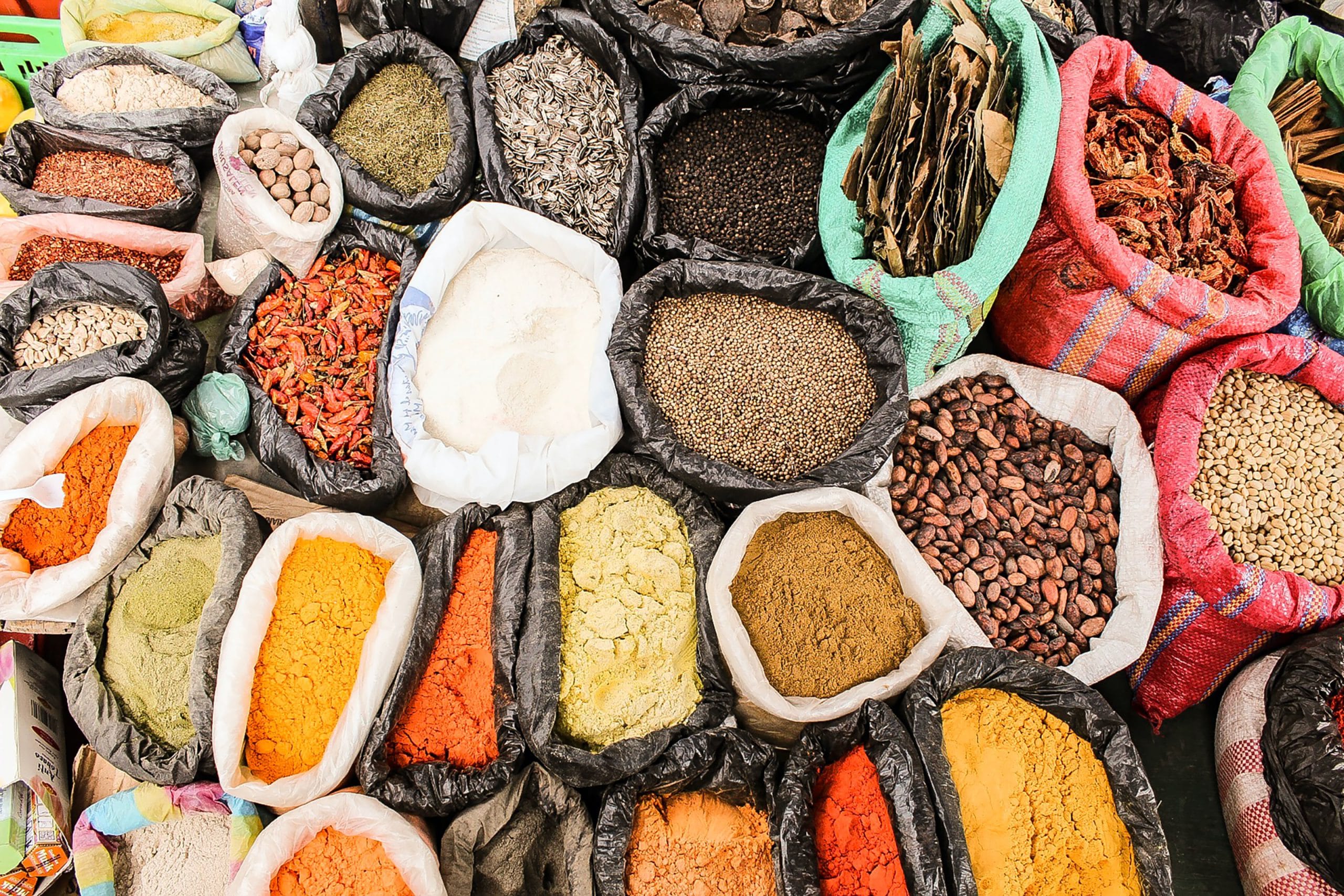
<p><img alt="image of multiple spices in colorful bags" class="fl-photo-img wp-image-2417 jetpack-lazy-image post-content-image" height="533" itemprop="image" src="/assets/images/blog/andrea-leon-vNrpgkrRtlk-unsplash-scaled.jpg" title="ingredients sourcing and consumer research" width="800" /></p>
<p><span style="font-weight: 400; font-size: 18px;">Let’s dive a little deeper into each of these sourcing challenges CPG brands face!</span></p>
<p><a name="small-brands"></a></p>
<h2><strong>Small brands struggle with ingredient sourcing </strong></h2>
<p><span style="font-weight: 400;">Let’s get to the point: small CPG brands (&lt;$1M in annual revenue) experience the pain of ingredient sourcing much more than large brands. In the survey, small brands are 3x more likely to say that they find it very difficult or difficult to source ingredients that meet their requirements.</span></p>
<p><span style="font-weight: 400;">When you’re a small brand, finding delicious, affordable ingredients for your products that also meet any certifications that you want is time-consuming and challenging, and finding sustainable or climate-friendly ingredients is even harder. Most small brands lack internal resources dedicated to sourcing and may not be large enough to meet minimum order requirements. </span></p>
<p><span style="font-weight: 400;">While sourcing can be more challenging for small CPG brands, small brands have more flexibility than larger brands. This means that you’re able to make unique partnerships with food producers directly or change your ingredient’s source much more quickly.</span></p>
<p><span style="font-weight: 400;"><strong>Consumer Research Implication</strong>: this insight gave Planet FWD information on their potential target consumer, allowing them to understand their pain points and where they are on their growth journey. </span></p>
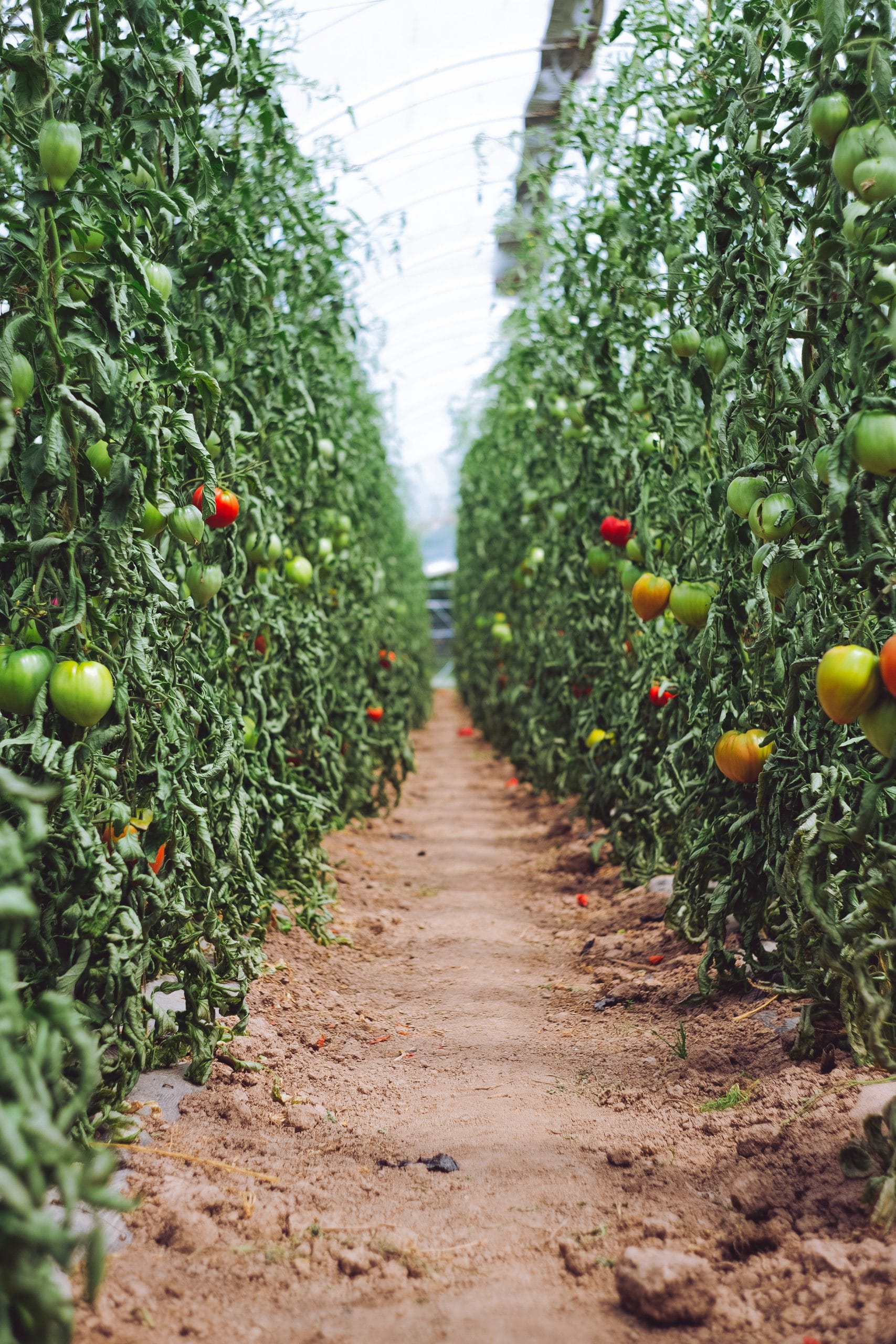
<p><img alt="image of two rows of tomato vines" class="fl-photo-img wp-image-2420 jetpack-lazy-image post-content-image" height="1200" itemprop="image" src="/assets/images/blog/markus-spiske-iOL-0GJY-DM-unsplash-scaled.jpg" title="consumer research on sustainable ingredients sourcing" width="800" /></p>
<p><a name="sustainability-climate-impact"></a></p>
<h2><span style="font-size: 28px;"><strong>Brands care about their products’ sustainability and climate impact</strong></span></h2>
<p><span style="font-weight: 400;">Of the brands surveyed, 86 percent of them are extremely or very interested in sourcing sustainable ingredients and 71 percent are extremely or very interested in addressing the climate impact of their products. This desire by brands corresponds to consumers wanting more sustainably-sourced products (Nielsen </span><a href="https://www.nielsen.com/us/en/insights/article/2019/sustainability-continues-to-drive-sales-across-the-cpg-landscape/"><span style="font-weight: 400;">reports</span></a><span style="font-weight: 400;"> they expect sustainably-minded consumers to spend up to $150 billion on sustainable products by 2021). </span></p>
<p><span style="font-weight: 400;">Our research also revealed that brands have different definitions of sustainability. Some brands may prioritize sustainable packaging, while other brands may prioritize sustainably sourced ingredients. Other brands are focusing on the overall environmental impact of their products. </span></p>
<p><span style="font-weight: 400;">It’s important for you to focus on the values that make the most sense for your brand equity and values, and to focus on the areas of your business that have the most environmental impact. </span></p>
<p><span style="font-weight: 400;"><strong>Consumer Research Implication:</strong> this insight validated a hypothesis that Planet FWD had about a need in the market and gave them the information they needed to describe the problem more clearly.</span></p>
<p><a name="business-objectives"></a></p>
<p><a name="sustainability-data"></a></p>
<h2><strong>Brands aren’t using quantitative sustainability data </strong></h2>
<p><span style="font-weight: 400;">77% of brands are currently collecting information about the sustainability characteristics of their ingredients and are already purchasing sustainably sourced ingredients. The challenge most brands face, however, is a lack of accessible and reliable sustainability data that will allow them to make more informed and nuanced purchasing decisions. Instead, brands rely on certifications, like Organic, instead of quantitative data, like Life Cycle Assessment or Greenhouse Gas data. Without quantitative data, it’s harder to compare ingredients on the metrics that are most important to you as a brand. For example, how do you choose between two different sources of wheat flour if carbon impact is the most important metric to your brand? Right now, most brands don’t have this detailed information. </span></p>
<p><span style="font-weight: 400;"><strong>Consumer Research Implication:</strong> this insight uncovered a consumer need and product requirement that Planet FWD is incorporating into their product development process.</span></p>
<p><a name="trust-reliability"></a></p>
<h2><strong>Trust and reliability are table stakes in ingredient sourcing</strong></h2>
<p><span style="font-weight: 400;">When it comes to sourcing ingredients, brands identified trust, reliability, and transparency as key factors when building relationships with their suppliers. This poses a challenge for many smaller brands because it takes a considerable amount of time and effort to identify ingredient options, request information from each supplier, and sort through this information to identify reliable and trusted partners. </span></p>
<p><span style="font-weight: 400;">In our survey, many brands said they are more inclined to trust suppliers with positive references from brands they know and respect. Several brands also said they’d shared a few of their trusted suppliers with other brands. Because of this consumer insight, Planet FWD is developing a tool, backed by data and brand references, to help brands identify trusted suppliers. </span></p>
<p><span style="font-weight: 400;"><strong>Consumer Research Implication:</strong> this insight allowed Planet FWD to identify two key features that were musts for their consumers.</span></p>
<p><a name="cost-competitive"></a></p>
<h2><strong>Cost-competitive ingredients and proven consumer demand are key motivators for addressing climate impact </strong></h2>
<p><span style="font-weight: 400;">When asked what would motivate them to lower the climate impact of their products, 69 percent of brands identified cost-competitive, climate-friendly ingredients, while 64 percent cited proven consumer demand as a motivator. In other words, these are the blockers that we have to address in order to increase the adoption of food brands using climate-friendly ingredients. </span></p>
<p><span style="font-weight: 400;">Studies have shown that consumers are willing to pay for sustainably-marketed products, even when it comes with a higher price tag. </span><a href="https://www.foodnavigator-usa.com/Article/2020/07/23/Sustainably-marketed-products-drove-more-than-half-of-all-growth-across-CPGs-in-past-five-years"><span style="font-weight: 400;">Research</span></a><span style="font-weight: 400;"> conducted by consumer research firm IRI and New York University Stern Center shows that sustainably-marketed products are growing in market share seven times faster than conventionally marketed products and are responsible for more than half of all growth in the CPG industry over the past five years. The same </span><a href="https://www.foodnavigator-usa.com/Article/2020/07/23/Sustainably-marketed-products-drove-more-than-half-of-all-growth-across-CPGs-in-past-five-years"><span style="font-weight: 400;">study</span></a><span style="font-weight: 400;"> revealed that the common drivers for this purchasing behavior were concern over environmental impact, attraction to brands’ commitments to renewable resources, and the overall benefit to the community. </span></p>
<p><span style="font-weight: 400;"><strong>Consumer Research Implication:</strong> Planet FWD identified the biggest blockers to their tool’s success so they could address them head-on. Their tool addresses the first blocker (availability of cost-competitive, climate-friendly ingredients) while their sister business, </span><a href="https://moonshotsnacks.com"><span style="font-weight: 400;">Moonshot</span></a><span style="font-weight: 400;">, addresses the second. Moonshot is the first climate-friendly snack brand in the US. Their first product is a climate-friendly cracker made with organic Edison wheat that is grown with regenerative agriculture practices. With wide coverage for the brand’s launch from </span><a href="https://www.forbes.com/sites/afdhelaziz/2020/12/11/how-julia-collins-and-moonshot-snacks-are-using-the-power-of-regenerative-agriculture-to-tackle-the-climate-crisis/"><span style="font-weight: 400;">Forbes</span></a><span style="font-weight: 400;">, </span><a href="https://www.fastcompany.com/90578289/this-climate-friendly-snack-brand-wants-to-change-how-we-eat"><span style="font-weight: 400;">Fast Company</span></a><span style="font-weight: 400;">, and Bloomberg Radio, they’re starting to demonstrate that consumer demand for climate-friendly products exists.</span></p>
<p><a name="whats-next"></a></p>
<h2><strong>What’s Next? </strong></h2>
<h2></h2>
<p><span style="font-weight: 400;">If you’ve experienced or are experiencing any of these sourcing challenges, you are not alone. These are pain points that most food brands experience as they’re working to launch or scale their products! Wouldn’t it be nice to have a tool that helps you provide sustainable and climate-friendly ingredients? Planet FWD is building a tool designed to do that very thing. </span><a href="https://planetfwd.com/"><span style="font-weight: 400;">Follow their journey</span></a><span style="font-weight: 400;"> to get early access and participate in beta testing for this new tool. If you’d like to have early input in the tool’s design, they’re doing more consumer interviews right now - reach out to </span><a href="mailto:marissa@planetfwd.com"><span style="font-weight: 400;">marissa@planetfwd.com</span></a><span style="font-weight: 400;"> to set-up a conversation!</span></p>
<p><span style="font-weight: 400;">And if you’re not incorporating consumer feedback into your business decision-making, </span><a href="/contact/"><span style="font-weight: 400;">reach out</span></a><span style="font-weight: 400;"> to me to discuss how consumer research can help you get clear about who your target consumer is, what they need, and the right words to use for your marketing messaging.  </span></p>]]></content><author><name>Christie Lee</name></author><category term="consumer-research" /><summary type="html"><![CDATA[]]></summary><media:thumbnail xmlns:media="http://search.yahoo.com/mrss/" url="https://www.nourishingfoodmarketing.com/assets/images/blog/andrea-leon-vNrpgkrRtlk-unsplash-scaled.jpg" /><media:content medium="image" url="https://www.nourishingfoodmarketing.com/assets/images/blog/andrea-leon-vNrpgkrRtlk-unsplash-scaled.jpg" xmlns:media="http://search.yahoo.com/mrss/" /></entry><entry><title type="html">Successfully Budget and Plan Your Sales and Marketing Distribution Support</title><link href="https://www.nourishingfoodmarketing.com/2020/10/07/budgeting-and-planning-sales-and-marketing-distribution-support/" rel="alternate" type="text/html" title="Successfully Budget and Plan Your Sales and Marketing Distribution Support" /><published>2020-10-08T03:48:21+00:00</published><updated>2020-10-08T03:48:21+00:00</updated><id>https://www.nourishingfoodmarketing.com/2020/10/07/budgeting-and-planning-sales-and-marketing-distribution-support</id><content type="html" xml:base="https://www.nourishingfoodmarketing.com/2020/10/07/budgeting-and-planning-sales-and-marketing-distribution-support/"><![CDATA[<p><img src="/assets/images/blog/photo-1578916171728-46686eac8d58.jpg" alt="Successfully Budget and Plan Your Sales and Marketing Distribution Support" class="post-featured-image" /></p>

<p><em><span style="font-size: 18px;">This post is part 2 of a series that I'm writing with Sandra at <a href="https://distrotalk.com/">Distro Talk</a>. She's a Sales &amp; Distribution Manager in NYC that runs an amazing course, Distro 101, to teach food founders all about Sales. </span></em></p>
<p><span style="font-size: 18px;"><span style="font-weight: 400;">In Part 1 of this series (<a href="https://distrotalk.com/whats-your-deal-placements-promotions-in-grocery/">What's Your Deal? Placements &amp; Promotions</a>), Sandra taught you the 101 on all things promotion. Now, let’s talk about how to use that information to create a strategic plan for supporting your in-store distribution with marketing and sales. In addition to talking about how to think budgeting, planning, and prioritizing your sales and marketing, I'll address the most popular marketing support options.</span></span></p>
<p><span style="text-decoration: underline;"><span style="font-size: 18px;">Table of Contents</span></span></p>
<ul>
<li style="list-style-type: none;">
<ul>
<li><span style="font-size: 18px;"><a href="#marketing-support">Marketing Support for In-Store Distribution</a></span></li>
<li><span style="font-size: 18px;"><a href="#budget-building">Building a Sales and Marketing Budget</a></span></li>
<li><span style="font-size: 18px;"><a href="#prioritizing-tactics">Prioritizing Your Sales and Marketing Tactics</a></span></li>
<li><span style="font-size: 18px;"><a href="#top-considerations">Top 6 Considerations When Developing Your Support Plan<br />
</a></span></li>
<li><span style="font-size: 18px;"><a href="#final-thoughts">Final Thoughts</a></span></li>
</ul>
</li>
</ul>
<p> </p>
<p><img alt="grocery store aisle" class="fl-photo-img wp-image-2318 jetpack-lazy-image post-content-image" height="225" itemprop="image" src="/assets/images/blog/photo-1578916171728-46686eac8d58.jpg" title="grocery store aisle" width="300" /></p>
<p><a name="marketing-support"></a></p>
<h2><strong>Marketing Support for In-Store Distribution</strong></h2>
<p><span style="font-size: 18px;"><span style="font-weight: 400;">Stores expect you to invest in promotions and marketing to support your product and drive products off shelves. Remember, getting your product to move off of shelves is your job, not the retailer’s job! So, how do you actually stand out on a crowded shelf?</span></span></p>
<p><span style="font-size: 18px;">Here's a break-down of the marketing tactics you should consider for supporting your products on-shelf:</span></p>
<p><span style="font-size: 18px;"><b>Trial driving</b><span style="font-weight: 400;"> tactics (otherwise known as Shopper Marketing) help get your products into consumer’s hands in-store. A typical consumer makes a purchasing decision in 4-6 seconds - what can you do to inspire them to choose your product? Tactics in this category include COVID-safe sampling, coupons (eg, traditional Instant Redeemable Coupons, digital coupons, or Ibotta rebates), hang tags/shelf talkers, and demos (in a non-COVID world).</span></span></p>
<p><img alt="stand out on shelf with marketing and sales support" class="fl-photo-img wp-image-2316 jetpack-lazy-image post-content-image" height="901" itemprop="image" src="/assets/images/blog/Shelf.jpg" title="stand out on shelf with marketing and sales support" width="676" /></p>
<p><span style="font-size: 18px;"><b>Awareness driving</b><span style="font-weight: 400;"> tactics help to get the word out about your products. A consumer typically has to see your brand 5-7 times before they look for your products in-store. </span></span></p>
<p><span style="font-weight: 400; font-size: 18px;">Tactics that require working media budget (otherwise known as pay-to-play) are geo-targeted Facebook/Google ads, giveaway partnerships with the retailer’s social media, and some influencer partnerships. </span></p>
<p><span style="font-weight: 400; font-size: 18px;">Tactics that do not require a working media budget (but of course require investment - you may need to invest time and money to write a press release but you don’t need to pay the journalist to write the magazine article) include social media campaigns, newsletter announcements of distribution and promotions at a particular retailer, your website, PR, and some influencer partnerships. </span></p>
<p><a name="budget-building"></a></p>
<h2><strong>Building a Sales and Marketing Budget</strong></h2>
<p><span style="font-size: 18px;"><span style="font-weight: 400;">Before you build a Sales and Marketing budget, please determine your Business Objectives first! This will help you determine tactic prioritization and budget allocation. You can read more about setting Business Objectives and Key Results in my </span><a href="/2020/04/27/the-definitive-guide-to-creating-a-marketing-plan-for-food-and-beverage-brands/"><span style="font-weight: 400;">Definitive Guide to Creating a Marketing Strategy</span></a><span style="font-weight: 400;">.</span></span></p>
<p><span style="font-weight: 400; font-size: 18px;">How much you should spend on sales and marketing isn’t a set % of revenue. It depends on:</span></p>
<ul>
<li style="font-weight: 400;"><span style="font-weight: 400; font-size: 18px;">Your business: how are you planning to grow? What do your investors expect in terms of revenue and profit? How much money do you make per product and how much can you afford to spend on sales and marketing? </span></li>
<li style="font-weight: 400;"><span style="font-weight: 400; font-size: 18px;">Your category: are you in a category that is high promotion (eg, chips)? If one of your competitors is always on sale, you probably need to run promotions.</span></li>
<li style="font-weight: 400;"><span style="font-weight: 400; font-size: 18px;">Your retail distribution: If you’re in an EveryDay Low Price (EDLP) retailer like Walmart and Wegmans, they don’t have promotions and you have to focus on marketing support.</span></li>
<li style="font-weight: 400;"><span style="font-weight: 400; font-size: 18px;">Your results: do your sales tactics perform better or do your marketing tactics perform better?</span></li>
<li style="font-weight: 400;"><span style="font-weight: 400; font-size: 18px;">Your team: are you best set-up to most efficiently and effectively deploy sales or marketing tactics?</span></li>
</ul>
<p><span style="font-weight: 400; font-size: 18px;">That being said, here are the general budget ranges that we’ve seen in the food and beverage industry. For trade support, 20-30% of revenue. For marketing support, 10-30% of revenue. </span></p>
<p><a name="business-objectives"></a></p>
<p><a name="prioritizing-tactics"></a></p>
<h2><span style="font-size: 28px;"><strong>Prioritizing Your Sales &amp; Marketing Tactics</strong></span></h2>
<p><span style="font-size: 18px;">A question that I hear a lot is, well, how much should I spend on Sales versus Marketing? Let's reframe that question - sales and marketing have the same business objectives (to sell your product!!) and the right question is: "How should I spend my budget to best achieve my business objective?" </span></p>
<p><span style="font-size: 18px;">Budgets for small brands aren't set in stone but you should have an idea of how much you can afford to spend from a cash and margin perspective from your sales forecast. This budget can flex up or down as your sales numbers roll in.</span></p>
<p><span style="font-size: 18px;">Then, you should allocate money to the sales or marketing tactic that best meets your business objective from both a cost and effectiveness standpoint. Place small bets on tactics, learn from them, and then double down on the tactics that help you meet your business objective and key results. You should compare tactics on an apples-to-apples basis:</span></p>
<ul>
<li><span style="font-size: 18px;"> Track how much it costs you to move a unit with a promo and compare it to a couponing program (increasing velocities)</span></li>
<li><span style="font-size: 18px;">Compare how much digital marketing increases velocities compared to an retailer ad (increase brand awareness)</span></li>
<li><span style="font-size: 18px;">Measure how much it costs you to sample your product via a consumer sampling program like PinchMe and a retailer e-sampling program (drive trial)</span></li>
</ul>
<p><span style="font-size: 18px;">As you decide how much to allocate to your sales and marketing budgets, first decide on your business objectives and  your sales and marketing objectives. Then, look to your past tactic performance and industry benchmarks to figure out how you should best spend your dollars (and don't forget to ask your fellow founders on groups like <a href="https://www.facebook.com/groups/omgcpg/">OMGCPG</a> or <a href="https://startupcpg.com/">StartUpCPG</a>!).</span></p>
<p><a name="institutional-funding"></a><a name="top-considerations"></a></p>
<h2><span style="font-size: 28px;"><strong>Top 6 Considerations When Developing Your Support Plan</strong></span></h2>
<p><span style="font-weight: 400; font-size: 18px;">In addition to the factors we mentioned above, there are strategic differences between sales and marketing tactics that are important to consider. </span></p>
<ul>
<li style="list-style-type: none;">
<ol>
<li style="font-weight: 400;"><span style="font-weight: 400; font-size: 18px;"><strong>PERFORMANCE REPORTING</strong>: You may not get data to measure the performance of your sales support tactics. It depends on the retailer, buyer, broker, and distributor of each program. Similarly, marketing tactics, aside from couponing, can be difficult to attribute to sales (ie, how much $ sales did a marketing dollar drive?). Instead, you would track leading indicator metrics that tell you how well your marketing programs are performing, such as number of engagements of a social media post, number of visitors to your website, and click-through-rate of a digital marketing campaign.</span></li>
<li style="font-weight: 400;"><span style="font-weight: 400; font-size: 18px;"><strong>FLEXIBILITY</strong>: It’s harder to increase or decrease your sales promo budgets quickly because it requires retailer coordination. Promo calendars are typically planned out months in advance. Marketing campaigns are much easier to dial up or dial back depending on your company financials and program performance.</span></li>
<li style="font-weight: 400;"><span style="font-weight: 400; font-size: 18px;"><strong>BRAND EQUITY</strong>: If you are on promo half the year, you train consumers to purchase your product when it’s on sale (see Sweet Baby Ray’s BBQ Sauce). Marketing builds your brand equity so consumers see the value of your product at full price.</span></li>
<li style="font-weight: 400;"><span style="font-weight: 400; font-size: 18px;"><strong>RESOURCING</strong>: For most small brand founders,, it’s easier to manage sales tactics without specialized knowledge. Marketing typically requires an investment to find an external resource with the know-how to confidently develop a marketing strategy and execute on it (like me!).</span></li>
<li style="font-weight: 400;"><span style="font-weight: 400; font-size: 18px;"><strong>LONG-TERM RAMIFICATIONS</strong>: Retailers typically expect promos to happen year-after-year once you commit. You can change the timing and add more funds to your programs, but expect a conversation with your buyer if you decide to decrease your annual promotions.</span></li>
<li style="font-weight: 400;"><span style="font-weight: 400; font-size: 18px;"><strong>FINANCIALS</strong>: Sales and marketing costs are typically treated differently by Finance. Sales costs are typically “above the line” and included as part of COGS (included in gross margin). Marketing costs are typically “below the line” and included as a SG&amp;A expense (included in net margin).</span></li>
</ol>
</li>
</ul>
<p><a name="final-thoughts"></a></p>
<h2><span style="font-size: 28px;"><strong>Final Thoughts</strong></span></h2>
<p><span style="font-weight: 400; font-size: 18px;">As you develop your 2021 sales and marketing plan, know that it’s not set in stone. It should change as you get new information: how your sales are doing in year two of a global pandemic, performance results of your tactics, and new opportunities. You’ll need to demonstrate to retailers that you will support your product through sales and marketing support but how you do it is up to you.</span></p>
<p style="text-align: center;"><span style="font-size: 24px;"><strong>Read the accompanying blog post, <a href="https://distrotalk.com/whats-your-deal-placements-promotions-in-grocery/">What's Your Deal? Pricing and Promotions</a>, by Sandra at <a href="https://distrotalk.com/">DistroTalk</a>.</strong></span></p>]]></content><author><name>Christie Lee</name></author><category term="brand-marketing" /><summary type="html"><![CDATA[]]></summary><media:thumbnail xmlns:media="http://search.yahoo.com/mrss/" url="https://www.nourishingfoodmarketing.com/assets/images/blog/photo-1578916171728-46686eac8d58.jpg" /><media:content medium="image" url="https://www.nourishingfoodmarketing.com/assets/images/blog/photo-1578916171728-46686eac8d58.jpg" xmlns:media="http://search.yahoo.com/mrss/" /></entry><entry><title type="html">Getting Started with Ecommerce for Food &amp;amp; Beverage Brands</title><link href="https://www.nourishingfoodmarketing.com/2020/06/07/getting-started-with-ecommerce-for-food-beverage-brands/" rel="alternate" type="text/html" title="Getting Started with Ecommerce for Food &amp;amp; Beverage Brands" /><published>2020-06-08T06:40:01+00:00</published><updated>2020-06-08T06:40:01+00:00</updated><id>https://www.nourishingfoodmarketing.com/2020/06/07/getting-started-with-ecommerce-for-food-beverage-brands</id><content type="html" xml:base="https://www.nourishingfoodmarketing.com/2020/06/07/getting-started-with-ecommerce-for-food-beverage-brands/"><![CDATA[<p><img src="/assets/images/blog/Ecommerce-Analysis-Amazon-Walmart-DTC-Social-Nourishing-Food-Marketing.png" alt="Getting Started with Ecommerce for Food &amp; Beverage Brands" class="post-featured-image" /></p>

<div class="post-presentation">
<iframe src="https://view.officeapps.live.com/op/embed.aspx?src=https://www.nourishingfoodmarketing.com/assets/files/Nourishing-Food-Marketing-Ecommerce-SlideShare-1.pptx" style="width: 100%; min-height: 500px; border: none;" title="Ecommerce for Food &amp; Beverage Brands - Slide Presentation"></iframe>
<p><a href="/assets/files/Nourishing-Food-Marketing-Ecommerce-SlideShare-1.pptx" download="">Download the presentation (PPTX)</a></p>
</div>]]></content><author><name>Christie Lee</name></author><category term="ecommerce" /><summary type="html"><![CDATA[]]></summary><media:thumbnail xmlns:media="http://search.yahoo.com/mrss/" url="https://www.nourishingfoodmarketing.com/assets/images/blog/Ecommerce-Analysis-Amazon-Walmart-DTC-Social-Nourishing-Food-Marketing.png" /><media:content medium="image" url="https://www.nourishingfoodmarketing.com/assets/images/blog/Ecommerce-Analysis-Amazon-Walmart-DTC-Social-Nourishing-Food-Marketing.png" xmlns:media="http://search.yahoo.com/mrss/" /></entry><entry><title type="html">Funding Your Food Brand &amp;amp; Why VC Funding May Not Be For You</title><link href="https://www.nourishingfoodmarketing.com/2020/05/15/why-vc-funding-may-not-be-for-your-food-or-beverage-brand/" rel="alternate" type="text/html" title="Funding Your Food Brand &amp;amp; Why VC Funding May Not Be For You" /><published>2020-05-15T08:33:29+00:00</published><updated>2020-05-15T08:33:29+00:00</updated><id>https://www.nourishingfoodmarketing.com/2020/05/15/why-vc-funding-may-not-be-for-your-food-or-beverage-brand</id><content type="html" xml:base="https://www.nourishingfoodmarketing.com/2020/05/15/why-vc-funding-may-not-be-for-your-food-or-beverage-brand/"><![CDATA[<p><img src="/assets/images/blog/money2-scaled.jpg" alt="Funding Your Food Brand &amp; Why VC Funding May Not Be For You" class="post-featured-image" /></p>

<p><span style="font-size: 18px;">Let’s talk about the two main funding paths for food and beverage CPG brands and how your funding changes how you run your business. For almost all CPGs, funding is a necessity as you’re building your business. I will pull back the curtain on this sometimes opaque subject by drawing on my experiences at Harvard Business School, as a food founder myself, and as an executive for 3 CPG start-ups so you can make an informed choice about how you raise money.</span></p>
<p><span style="font-size: 18px;">Read this post if</span></p>
<p><span style="font-size: 18px;">✔️ you're a food brand that needs funding and you're wondering where it's going to come from</span></p>
<p><span style="font-size: 18px;">✔️ you want to understand the world of venture capitalists (VCs) and institutional funding</span></p>
<p><span style="font-size: 18px;">✔️ you are concerned about how your company will change once you raise seven figures</span></p>
<p><span style="font-size: 18px;">This post isn't a guide on how to raise funding, but rather on how to think about raising money.</span></p>
<p><span style="text-decoration: underline;"><span style="font-size: 18px;">Table of Contents</span></span></p>
<ul>
<li><span style="font-size: 18px;"><a href="#funding-success">Two Funding Paths and What Success Means to You</a></span></li>
<li><span style="font-size: 18px;"><a href="#raise-funding">Brands Need to Raise Funding to Operate Their Growing Business</a></span></li>
<li><span style="font-size: 18px;"><a href="#institutional-funding">Option 1: Institutional Funding Writes Big Checks and Changes How You Do Business</a></span></li>
<li><span style="font-size: 18px;"><a href="#friends-family">Option 2: Patient Friends &amp; Family Funding</a></span></li>
<li><span style="font-size: 18px;"><a href="#changes-operating-model">How Institutional Funding Changes the CPG Operating Model</a></span></li>
<li><span style="font-size: 18px;"><a href="#funding-path">Choose the Funding Path That Works for You</a></span></li>
</ul>
<p><img alt="funding institutional vc friends family" class="fl-photo-img wp-image-1953 jetpack-lazy-image post-content-image" height="533" itemprop="image" src="/assets/images/blog/money2-scaled.jpg" title="money" width="800" /></p>
<p><a name="funding-success"></a></p>
<h2><strong>Two Funding Paths and What Success Means to You</strong></h2>
<p><span style="font-size: 18px;">There are two main paths for funding: institutional funding and Friends &amp; Family funding. </span></p>
<p><span style="font-size: 18px;">I define institutional funding as money that comes from venture capital firms, private equity firms, or high net worth individuals. Institutional investors need you to make a 10x return on their investment in less than ten years for their <a href="https://www.theequitykicker.com/2012/10/25/return-profile-of-vc-investments-shows-why-home-runs-are-key/">business model to work</a>. For simplicities sake, I use ‘VC’ to refer to the whole group of institutional investors in this article.</span></p>
<p><span style="font-size: 18px;">Here’s my biggest learning from 13 years in the CPG business  – not everyone should raise VC money. Institutional money dictates a certain growth and business operational model (more on these implications later). If you’re a brand that has found your niche and you’re profitably grooving and making money, that’s fabulous! You don’t need to be in every store and every household to be a success. How success is defined is a very personal question and <em>you</em> need to answer this question for yourself. What’s your goal in building your food and beverage brand? How do <em>you</em> define success in your professional life? I highly recommend taking the time to understand how you define success.</span></p>
<p><img alt="defining personal success" class="fl-photo-img wp-image-1955 jetpack-lazy-image post-content-image" height="800" itemprop="image" src="/assets/images/blog/success-BW-scaled.jpg" title="success B&amp;W" width="800" /></p>
<p><span style="font-size: 18px;">Let's dive deep into the two typical funding paths for food and beverage CPG businesses and the implications of each. With this background, you can be thoughtful and strategic about how you raise funding.</span></p>
<p><a name="raise-funding"></a></p>
<h2><strong>Brands Need to Raise Funding to Operate Their Growing Business</strong></h2>
<p><span style="font-size: 18px;">Here’s a common growth path for brands. This is a very simplistic view that glosses over a lot of the blood, sweat, and tears during the journey so we can get straight to how your fundraising choices influence your operating model.</span></p>
<p><span style="font-size: 18px;">1. You make a great product and are in some stores. Nice job!</span></p>
<p><span style="font-size: 18px;">2. Now, you’re bootstrapping your way to prove traction and show that consumers love your product. You’re dialing in the right target consumer, retailers, product positioning, and messaging. Once your product is flying off the shelves and other stores want your product, now you need more cash to fuel your growth.</span></p>
<p><span style="font-size: 18px;">You might say, “Wait a minute, my product is flying off the shelves, why do I need to take on outside money to grow?” Unfortunately, the old adage that you need to spend money to make money is doubly true in the CPG industry. Typical CPG profit margins don’t leave you with enough cash to expand your distribution because your distribution growth typically happens in large jumps (ie, 500 Whole Foods stores) and not gradually. The payment cycles of the CPG industry is particularly difficult from a cash management perspective: if you expand to more stores and open up another distribution center, you don’t have enough cash on hand to pay for manufacturing a larger order when retailers and distributors pay you 90-120 days after you’ve made that larger order. The money you need to operate your business is typically called ‘working capital.’</span></p>
<p><span style="font-size: 18px;">3. OK, now it’s time to raise money. You create your fundraising deck and start to pitch…but who should you pitch to?</span></p>
<p><a name="business-objectives"></a></p>
<p><a name="institutional-funding"></a></p>
<h2><span style="font-size: 28px;"><strong>Option 1: Institutional Funding Writes Big Checks and Changes How You Do Business</strong></span></h2>
<p><span style="font-size: 18px;">Institutional funding typically comes with larger infusions of money ($1-3M seed rounds), free guidance from industry experts, and access to a network of partners (eg, brokers, distributors, buyers) that can help grow your business. But, there’s no such thing as free money and institutional funding comes with expectations and strings attached. There’s a clear change in how much you own of the company and how many board seats you have. There are also impactful changes in how you run your business once you’ve raised institutional funding so you can hit VC growth targets (more on this later).</span></p>
<p><span style="font-size: 18px;">You’ll be on a path to make bigger bets and grow faster when you take on institutional funding (sometimes known as fail fast, fail early). Some of this growth is natural – you have more money, so you can do more marketing to reach more consumers and afford more slotting fees to get into mainstream grocery stores. You have the working capital to ramp up your business and use volumes to decrease your retail pricing so your product is at a more accessible price point. However, some of this growth is compulsory when you take on institutional funding. You need an exit plan or a path to one when you raise money, and you need to grow fast enough that you can achieve your next milestone before your funding runs out. VCs aren’t looking for singles on their <strong>return on investment</strong>, they’re looking for home runs. They’ll push you to grow as big as possible because more revenue means a higher acquisition price.</span></p>
<p><span style="font-size: 18px;">You should opt for institutional funding if:</span></p>
<ul>
<li><span style="font-size: 18px;">you have a product with wide appeal and consumers around the country are clamoring for your product</span></li>
<li><span style="font-size: 18px;">you have a capital-intensive business and are self-manufacturing</span></li>
<li><span style="font-size: 18px;">you are in a highly competitive category where you need money to grab market share quickly before being crowded out by competition (eg, cereal)</span></li>
<li><span style="font-size: 18px;">you are in a category where you need significant promotional dollars to break through (eg, chips)</span></li>
<li><span style="font-size: 18px;">you are building a new category and must do a lot of consumer education (eg, Perfect Bar)</span></li>
</ul>
<p><a name="friends-family"></a></p>
<h2><span style="font-size: 28px;"><strong>Option 2: Patient Friends &amp; Family Funding</strong></span></h2>
<p><span style="font-size: 18px;">You can also raise money from friends and family, angel investors, or crowdsourcing (eg, Kickstarter) to get the cash you need to run your business. Money from these sources is typically much more patient with fewer expectations. They expect free product, quarterly updates, and a payout when you make it big.</span></p>
<p><span style="font-size: 18px;">Your company ownership gets more complicated with more players with many more people in your capitalization table but they will collectively own a smaller percentage of your company because they invest less money.</span></p>
<p><span style="font-size: 18px;">You should opt for Friends and Family funding if:</span></p>
<ul>
<li><span style="font-size: 18px;"> you prefer the tortoise to the hare and building your company slowly and deliberately</span></li>
<li><span style="font-size: 18px;">you are disciplined and can say No to opportunities that don’t align with your growth plan (ie, you may not be able to expand to all 1200 Publix stores at once)</span></li>
<li><span style="font-size: 18px;">you enjoy the fast-paced, resource-constrained nature of entrepreneurship and being the decision maker. </span></li>
<li><span style="font-size: 18px;">you love being the CEO of your own food company and want to stay in that role</span></li>
</ul>
<p><a name="changes-operating-model"></a></p>
<h2 style="text-align: center;"><span style="font-size: 28px;"><b>How Institutional Funding </b><b>Changes the CPG Operating Model</b></span></h2>
<p style="text-align: center;"><span style="font-size: 18px;">Implications</span></p>
<p style="text-align: center;"><span style="font-size: 18px;">Scrappy start-up</span></p>
<p style="text-align: center;"><span style="font-size: 18px;">Institutional Funding</span></p>
<p style="text-align: center;"><span style="font-size: 18px;">Fundraising</span></p>
<p style="text-align: center;"><span style="font-size: 18px;">Raise $50-500k from friends, family, and angel investors to fund working capital and brand building</span></p>
<p style="text-align: center;"><span style="font-size: 18px;">Raise $1-3M seed round to build the brand and grow as quickly as possible</span></p>
<p style="text-align: center;"><span style="font-size: 18px;">Founding Team</span></p>
<p style="text-align: center;"><span style="font-size: 18px;">Much larger equity % but lower salaries</span></p>
<p style="text-align: center;"><span style="font-size: 18px;">Much smaller equity % but market-rate salaries</span></p>
<p style="text-align: center;"><span style="font-size: 18px;">Employees</span></p>
<p style="text-align: center;"><span style="font-size: 18px;">Hire freelancers and passionate junior employees</span></p>
<p style="text-align: center;"><span style="font-size: 18px;">Hire industry veterans and build a larger team (5+)</span></p>
<p style="text-align: center;"><span style="font-size: 18px;">Channel Strategy</span></p>
<p style="text-align: center;"><span style="font-size: 18px;">Start with your core retailer and expand slowly to additional stores once you’ve got product flying off the shelves</span></p>
<p style="text-align: center;"><span style="font-size: 18px;">Expand more quickly to increase your sales and drive down COGS and MSRP</span></p>
<p style="text-align: center;"><span style="font-size: 18px;">Product Development</span></p>
<p style="text-align: center;"><span style="font-size: 18px;">Focus on one product line and possibly line extensions</span></p>
<p style="text-align: center;"><span style="font-size: 18px;">Launch many product lines across different categories with the expectation that not all will succeed</span></p>
<p style="text-align: center;"><span style="font-size: 18px;">Marketing</span></p>
<p style="text-align: center;"><span style="font-size: 18px;">Small marketing spend focused on building an engaged social media community</span></p>
<p style="text-align: center;"><span style="font-size: 18px;">Invest to grow with digital and shopper marketing to support new distribution</span></p>
<p style="text-align: center;"><span style="font-size: 18px;">Exit Strategy</span></p>
<p style="text-align: center;"><span style="font-size: 18px;">Demonstrate enough success to raise VC funding, become acquired, or continue as a Founder-led brand of a profitable food company</span></p>
<p style="text-align: center;"><span style="font-size: 18px;">Acquisition by one of the Big Food companies at a ≥ 4x Revenue to Acquisition Price multiple or IPO</span></p>
<p><a name="funding-path"></a></p>
<h2><strong>Choose the Funding Path That Works For You</strong></h2>
<p><span style="font-size: 18px;">If you’re a food founder thinking about whether you should raise VC money, the answer is – it depends. Kudos to you for creating, developing, tweaking, and demonstrating that your product works! No matter which funding path you take, you can be successful. </span></p>
<p><span style="font-size: 18px;">There are lots of great success stories for brands with VC funding:</span></p>
<ul>
<li><span style="font-size: 18px;"><a href="https://www.cnbc.com/2019/12/26/what-beyond-meat-wework-teach-us-about-ipos-of-next-decade.html">Beyond Meat is the hottest IPO</a> of the last year</span></li>
<li><span style="font-size: 18px;"><a href="https://www.nutraingredients-usa.com/Article/2019/04/19/Unilever-gives-supplements-another-chance-with-Olly-acquisition">Unilever acquired Dollar Shave Club</a> in 2016</span></li>
<li><span style="font-size: 18px;"> <a href="https://www.fooddive.com/news/vita-cocos-parent-company-acquires-natural-energy-drink-runa/526328/">Vita Coco acquires Runa Tea in 2018</a> in 2017</span></li>
</ul>
<p><span style="font-size: 18px;">There are also lots of great examples of success for brands that didn't raise institutional funding:</span></p>
<ul>
<li><span style="font-size: 18px;"><a href="https://sweetlorens.com/">Sweet Loren's</a> is still founder-led and was named <a href="https://www.prnewswire.com/news-releases/sweet-lorens-ranks-no-114-on-the-2019-inc-5000-americas-fastest-growing-private-companies-300904860.html">one of the fastest-growing private companies</a> last year</span></li>
<li><span style="font-size: 18px;"><a href="https://www.fooddive.com/news/ab-inbev-buys-craft-brewer-platform-beer/560553/">Platform Brewing Co. was acquired by Anheuser-Busch</a> in 2014</span></li>
<li><span style="font-size: 18px;"><a href="https://chomps.com/">Chomps</a> was also named <a href="https://www.cspdailynews.com/snacks-candy/chomps-meat-snacks-among-inc-5000-2019">one of the fasted-growing private companies</a> last year</span></li>
</ul>
<p><span style="font-size: 18px;">Now, you must decide what success means for you and how you can achieve it! </span></p>]]></content><author><name>Christie Lee</name></author><category term="funding" /><summary type="html"><![CDATA[]]></summary><media:thumbnail xmlns:media="http://search.yahoo.com/mrss/" url="https://www.nourishingfoodmarketing.com/assets/images/blog/money2-scaled.jpg" /><media:content medium="image" url="https://www.nourishingfoodmarketing.com/assets/images/blog/money2-scaled.jpg" xmlns:media="http://search.yahoo.com/mrss/" /></entry><entry><title type="html">The Definitive Guide to Creating a Marketing Strategy for Food and Beverage Brands</title><link href="https://www.nourishingfoodmarketing.com/2020/04/27/the-definitive-guide-to-creating-a-marketing-plan-for-food-and-beverage-brands/" rel="alternate" type="text/html" title="The Definitive Guide to Creating a Marketing Strategy for Food and Beverage Brands" /><published>2020-04-27T12:18:17+00:00</published><updated>2020-04-27T12:18:17+00:00</updated><id>https://www.nourishingfoodmarketing.com/2020/04/27/the-definitive-guide-to-creating-a-marketing-plan-for-food-and-beverage-brands</id><content type="html" xml:base="https://www.nourishingfoodmarketing.com/2020/04/27/the-definitive-guide-to-creating-a-marketing-plan-for-food-and-beverage-brands/"><![CDATA[<p><img src="/assets/images/blog/Marketing-Funnel-Featured-Image-Logo.png" alt="The Definitive Guide to Creating a Marketing Strategy for Food and Beverage Brands" class="post-featured-image" /></p>

<p><span style="font-size: 18px;">This is a comprehensive FREE guide for building a Marketing Strategy for food and beverage Consumer Packaged Goods (CPG) companies. I'll take you through a step-by-step framework to walk you through how to build an effective (achieve your goals) and efficient (with the least amount of time &amp; money) Marketing Strategy for your business.</span></p>
<p><span style="font-size: 18px;">This guide is for you if:</span></p>
<p><span style="font-size: 18px;">✔️ you feel overwhelmed by all things marketing - you know you need to do it, but you don't know how</span></p>
<p><span style="font-size: 18px;">✔️ you feel lost and directionless when you think about your marketing plans so you keep putting it off</span></p>
<p><span style="font-size: 18px;">✔️ are taking lots of action and spending $$ on your marketing but you just aren't sure if it's growing your business</span></p>
<p><span style="font-size: 18px;">✔️ you feel uncertainty every time a 'last minute special' lands in your inbox and you spend precious time figuring out if this marketing tactic is worth your while</span></p>
<p><span style="font-size: 18px;">In the next 8 pages, I'll walk you through my framework for putting together an action-oriented Marketing Strategy that creates clarity around WHY you're doing marketing and HOW you're approaching marketing. I created this framework by adapting the Big Food Marketing Strategies that I learned at Clorox, working on Americana food brands like Hidden Valley Ranch, to a fast-moving and resource-constrained start-up when I started my own brand, Tiny Hero. I've put this Marketing Strategy Framework through its paces as a food founder myself and as a consultant to over a dozen emerging food brands and can't wait for you to get the same clarity in your marketing!</span></p>
<p><span style="text-decoration: underline;"><span style="font-size: 18px;">Table of Contents</span></span></p>
<ul>
<li><span style="font-size: 18px;"><a href="#marketing-strategy-purpose"><span style="font-size: 18px;">What is a Marketing Strategy and Why Do I Need to Make One?</span></a></span>
<ul>
<li><span style="font-size: 16px;"><a href="#define-marketing-strategy">What a Marketing Strategy Is and Is Not</a></span></li>
<li><a href="#marketing-strategy-purpose"><span style="font-size: 16px;">Why You Need a Marketing Strategy</span></a></li>
</ul>
</li>
<li><span style="font-size: 18px;"><a href="#business-objectives">Step One: Start with Your Business Objectives and Key Results</a></span>
<ul>
<li><span style="font-size: 16px;"><a href="#defining-business-objectives">What are Business Objectives and Key Results?</a></span></li>
<li><span style="font-size: 16px;"><a href="#common-business-objectives">Most Common Business Objectives and Key Results for Food CPG brands</a></span></li>
<li><span style="font-size: 16px;"><a href="#setting-business-objectives">Setting Your Business Objectives and Key Results</a></span></li>
</ul>
</li>
<li><span style="font-size: 18px;"><a href="#marketing-objectives">Step Two: Establish the Marketing Objectives and Tactics that Help You Achieve Your Business Objectives</a></span>
<ul>
<li><span style="font-size: 16px;"><a href="#target-consumer">Consider Your Target Consumer</a></span></li>
<li><span style="font-size: 16px;"><a href="#marketing-funnel">Consider Your Marketing Funnel</a></span></li>
<li><span style="font-size: 16px;"><a href="#common-marketing-objectives">Most Common Marketing Objectives and Tactics for Food CPG Brands</a></span></li>
<li><span style="font-size: 16px;"><a href="#setting-marketing-objectives">Setting Your Marketing Objectives and Tactics</a></span></li>
</ul>
</li>
<li><span style="font-size: 18px;"><a href="#key-metrics">Step Three: Establish Key Metrics for each of Your Marketing Tactics </a></span></li>
<li><span style="font-size: 18px;"><a href="#key-metrics">Step Four: Execution, Testing, and Learning </a></span></li>
</ul>
<p><a name="marketing-strategy-purpose"></a></p>
<h2>What is a Marketing Strategy and Why Do I Need to Make One?</h2>
<p><span style="font-size: 18px;">In this guide, I'm going to condense 13 years of CPG experience into clear steps to help you build a Marketing Strategy. This section is all about the basics to make sure we're on the same page. </span></p>
<p><a name="define-marketing-strategy"></a></p>
<h3><span style="font-size: 20px;">What a Marketing Strategy Is and Is Not</span></h3>
<p><span style="font-size: 18px;">First, let’s talk about what a Marketing Strategy is. This is THE strategy, the strategy that puts down on paper how you are going to let your consumers know about your brand and what makes your products special. For example, your plan will most likely include driving consumer awareness and trial.</span></p>
<p><span style="font-size: 18px;">And here’s what a Marketing Strategy IS NOT – it’s not a complete work plan for your marketing function, whether that be one person, a whole team of people, or a consultant. This strategy is one piece of the thought leadership that you need from your marketing team (not to mention the people leadership, which is critical in a function that works with so many different types of creatives to build a brand). Your typical brand marketer has business training, likely an MBA, so you should also look to her for thought leadership and input on business strategy (building a thriving business), product development (establishing key claims and ingredients), and pricing strategy (understanding the positioning of your competitive set).</span></p>
<p><span style="font-size: 18px;">Your Marketing Strategy is used to communicate everything that you're doing that is consumer-facing to your entire team, retailers, and creative partners.</span></p>
<p><span style="font-size: 20px;"><em>A short aside on a couple of terms that may be new to you:</em></span></p>
<h4>Consumer Awareness:</h4>
<p>When your target consumer knows about your brand. Marketers sometimes refer to unaided and aided awareness. Unaided means that a consumer names your brand when asked “When you think of crackers, what brands come to mind?” and aided means that a consumer picks your brand when asked “Which of the following cracker brands have you heard of?” Unaided is better than aided, because this indicates that consumers have a stronger memory of your brand.</p>
<h4>Trial:</h4>
<p>When your consumer buys and tries your product. Once your target consumer is aware of your brand, it typically takes 5-7 experiences with your brand (eg, advertising, great social media content, seeing your product on-shelf) before they'll buy your product. It's just like getting kids to eat vegetables! The end goal of your consumer trying your product is for it to be SO delicious that your new consumer keeps coming back for more and becomes a life-long consumer.</p>
<p><a name="business-objectives"></a></p>
<h2>Step One: Start with your Business Objectives and Key Results</h2>
<p><span style="font-size: 18px;"> The first step in building a kickass Marketing Strategy is writing down your business objectives and key results. Your marketing strategy needs to contribute to these business objectives - after all, why else are you marketing your brand?</span></p>
<h3><span style="font-size: 20px;">What are Business Objectives and Key Results?</span></h3>
<p><a name="defining-business-objectives"></a><span style="font-size: 18px;">You may notice that my Marketing Strategy framework closely mirrors the popular OKR framework. </span><span style="font-size: 18px;">Objectives should be short, inspirational and engaging. An Objective should motivate and challenge the team. </span><span style="font-size: 18px;">Key Results are a set of metrics that measure your progress towards the Objective. For each Objective, you should have a set of 2-5 Key Results. </span></p>
<h3><a name="common-business-objectives"></a><span style="font-size: 20px;">Here are the Most Common Business Objectives and Key Results for Food and Beverage Consumer Packaged Goods Companies:</span></h3>
<ul>
<li><span style="font-size: 18px;">Business Objective #1: Increase revenue in a specific channel (eg, specific retailer, food service, online). </span>
<ul>
<li><span style="font-size: 16px;">Key Result #1: Increase velocities (units/store/week)</span></li>
<li><span style="font-size: 16px;">Key result #2: Increase distribution (# of stores that you have placement)</span></li>
</ul>
</li>
<li><span style="font-size: 18px;">Business Objective #2: Increase profitability in a specific channel (eg, specific retailer, food service, online). </span>
<ul>
<li><span style="font-size: 16px;">Key Result #1: Increase velocities (units/store/week)</span></li>
<li><span style="font-size: 16px;">Key Result #2: Reduce product COGS</span></li>
<li><span style="font-size: 16px;">Key Result #3: Reduce operating costs (eg, distributor or promotional costs)</span></li>
</ul>
</li>
<li><span style="font-size: 18px;">Business Objective #3: Launch a new product</span>
<ul>
<li><span style="font-size: 16px;">Key Result #1: Authorization at target retailers</span></li>
<li><span style="font-size: 16px;">Key Result #2: Consumer purchase intent and feedback</span></li>
</ul>
</li>
<li><span style="font-size: 18px;">Business Objective #4: Launch a line extension (eg, additional SKUs of an existing product line that are a different size or flavor)</span>
<ul>
<li><span style="font-size: 16px;">Key Result #1: Authorization at target retailers</span></li>
<li><span style="font-size: 16px;">Key Result #2: Consumer purchase intent and feedback</span></li>
</ul>
</li>
</ul>
<p><span style="font-size: 18px;">For example, I will (objective) increase my revenue at Whole Foods Southern California by (key result) increasing velocities in store by 25%. </span></p>
<h3><span style="font-size: 20px;"><a name="setting-business-objectives"></a>Setting your Business Objectives and Key Results</span></h3>
<p><span style="font-size: 18px;">You'll notice that your business objectives should be very specific so that they are actionable. “Grow my food business to $1 million in revenue” isn’t as useful for planning as “Increase sales at brick &amp; mortar natural retailers by 25% by the end of the year.” I like the <a href="https://corporatefinanceinstitute.com/resources/knowledge/other/smart-goal/">SMART framework</a> for goal setting, which recommends goals that are Specific, Measurable, Achievable, Realistic, and Timely. </span></p>
<p><span style="font-size: 18px;">Once you’ve established 5-10 business objectives for the year, let's talk about what your marketing objectives should be to achieve your business objectives.</span></p>
<p><a name="marketing-objectives"></a></p>
<h2>Step Two: Establish the Marketing Objectives and Tactics that help you Achieve your Business Objectives</h2>
<p><span style="font-size: 18px;">Now that you've done the hard work of defining your business objectives, you've built the scaffolding you need to create the most effective and efficient Marketing Strategy for your brand.</span></p>
<p><span style="font-size: 18px;">You probably know what is going to come next: now it's time to establish your Marketing Objectives and the Tactics to achieve those Objectives! As you're establishing these:</span><br />
<a name="target-consumer"></a></p>
<h3><span style="font-size: 20px;">Consider Your Target Consumer</span></h3>
<p><span style="font-size: 18px;">Your target consumer is the ideal person that loves your product so much that they'll buy it over and over and tell all their friends about your amazing food product. You can describe your target consumer by their demographics (age, gender, household income), attitudes (what they believe - organic is the best,  taste is king, gluten-free is a must), and behaviors (favorite retailers, types of foods that they eat).</span><br />
<a name="marketing-funnel"></a></p>
<h3><span style="font-size: 20px;">Consider Where in the Marketing Funnel Your Consumer Is</span></h3>
<p><span style="font-size: 18px;">The marketing funnel is a visual representation of the journey that your target consumer takes to become <em>your</em> consumer. They move further into the funnel as they get to know your brand.</span></p>
<p><span style="font-size: 18px;">In my marketing funnel, specifically developed food and beverage CPG brands, there are five stages: awareness, consideration, trial, purchase, and brand advocate. As you develop your Marketing Objectives, consider where in the marketing funnel you need to focus to meet your Business Objectives. In each of these stages, you would take different marketing tactics to reach your target consumer. </span></p>
<p><img alt="Consumer Marketing Funnel Featured Image Logo" class="fl-photo-img wp-image-2159 jetpack-lazy-image post-content-image" height="369" itemprop="image" src="/assets/images/blog/Marketing-Funnel-Featured-Image-Logo.png" title="Marketing Funnel Featured Image Logo" width="800" /></p>
<h3 style="padding-left: 40px;"><a name="common-marketing-objectives"></a><span style="font-size: 20px;">Most Common Marketing Objectives and Marketing Tactics for Food and Beverage Manufacturers: </span></h3>
<p style="padding-left: 40px;"><span style="font-size: 16px;">OK, now that that we've talked about the theory behind how you should think about your Marketing Objectives, let's get to the money list!</span></p>
<ul>
<li style="list-style-type: none;">
<ul>
<li><span style="font-size: 16px;">Marketing Objective #1: Consistently communicate your product positioning and benefits across all creative assets</span>
<ul>
<li><span style="font-size: 16px;">Tactic #1: Consumer research to establish communication hierarchy</span></li>
<li><span style="font-size: 16px;">Tactic #2: Refresh product packaging </span></li>
<li><span style="font-size: 16px;">Tactic #3: Develop and execute on engaging social media content strategy</span></li>
</ul>
</li>
<li><span style="font-size: 16px;">Marketing Objective #2: Drive awareness of your product at specific retailer to support a new distribution launch</span>
<ul>
<li><span style="font-size: 16px;">Tactic #1: Geo-targeted digital marketing (Google and Facebook Ads)</span></li>
<li><span style="font-size: 16px;">Tactic #2: Geo-targeted influencer campaign</span></li>
<li><span style="font-size: 16px;">Tactic #3: Events (eg, festivals, mom's groups)</span></li>
</ul>
</li>
<li><span style="font-size: 16px;">Marketing Objective #3: Drive trial of an under-performing product at specific retailer so it doesn't get discontinued</span>
<ul>
<li><span style="font-size: 16px;">Tactic #1: Coupons (offered through retailer or coupon app such as Ibotta)</span></li>
<li><span style="font-size: 16px;">Tactic #2: Demos</span></li>
<li><span style="font-size: 16px;">Tactic #3: Money Back Guarantees</span></li>
</ul>
</li>
<li><span style="font-size: 16px;">Marketing Objective #4: Define your target consumer so you can find your first 1000 consumers</span></li>
<li><span style="font-size: 16px;">Tactic #1: Understand your current consumers (demographically, attitudinally, and behaviorally)</span></li>
<li><span style="font-size: 16px;">Tactic #2: Analyze data from Google Analytics, Facebook, and Instagram about who is engaging with your brand</span></li>
</ul>
</li>
<li><span style="font-size: 18px;">Marketing Objective #5: Launch a new product with strong consumer value</span>
<ul>
<li><span style="font-size: 16px;">Tactic #1: Consumer research to establish product positioning, flavors, or pricing</span></li>
<li><span style="font-size: 16px;">Tactic #2: Develop fantastic product packaging</span></li>
<li><span style="font-size: 16px;">Tactic #3: Update website to incorporate new products</span></li>
</ul>
</li>
</ul>
<p><a name="setting-marketing-objectives"></a></p>
<h3><span style="font-size: 20px;">Setting Your Marketing Objectives and Tactics</span></h3>
<p><span style="font-size: 18px;">You can't tackle all of your target consumers at every stage in marketing funnel, so where should you focus your energies? Well, that depends on your business and where you have the most opportunity to grow. To have a profitable business, you need enough consumers buying you enough times. </span></p>
<p><span style="font-size: 18px;">Your brand could have many consumers buying your product once for a special occasion. Then, your Marketing Strategy should focus on the Repeat Purchase stage of the marketing funnel. </span></p>
<p><span style="font-size: 18px;"> Or, your brand could have a few consumers buying your product every day. Then, your Marketing Strategy should focus on the Brand Advocate and Awareness parts of the marketing funnel.</span></p>
<p><span style="font-size: 18px;">Using consumer research, figure out what your consumer base looks like and the Marketing Objectives that will help you best achieve your Business Objectives. Then, lay out the tactics that will most effectively and efficiently achieve those Marketing Objectives.</span></p>
<p><a name="key-metrics"></a></p>
<h2>Step Three: Establish Key Metrics for each of your Marketing Tactics</h2>
<p><span style="font-size: 18px;">It's critical to set key metrics for each of your marketing tactics. These metrics should be your tactic's budget, timing, and results. These metrics keep you accountable but also give you a tool for planning. They help you: </span></p>
<ul>
<li><span style="font-size: 18px;">Compare costs of your different marketing tactics to each other and prioritize tactics appropriately. Which driver of awareness is the most cost effective? Is running a coupon through Sprouts better than using the Ibotta platform? What about in comparison to sending products to influencers?</span></li>
<li><span style="font-size: 18px;">Define success by improving your own metrics over time. Are you gaining more Instagram followers week-over-week? Are your Costs Per Click decreasing month-over-month? Are your in-store velocities increasing year-by-year? </span></li>
<li><span style="font-size: 18px;">Use industry benchmarks to analyze how you're doing compared to other food and beverage brands</span></li>
</ul>
<p><a name="execute-test-learn"></a></p>
<h2>Step Four: Execution, Testing, and Learning</h2>
<p><span style="font-size: 18px;">Hooray, give yourself a pat on the back - it's a lot of work to put a Marketing Strategy together! It's so worth it to have a clear, focused approach to your marketing efforts. </span><span style="font-size: 18px;">Now, you have to put this glorious plan into action. Here are a few parting thoughts to help set you up for success:</span></p>
<p><span style="font-size: 18px;">Marketing works. Just look at some of the most iconic brands on the world (McDonald's, Coca Cola). But, marketing that works for your friend's brand may not work for you.</span></p>
<p><span style="font-size: 18px;">Every brand is different. Your target consumer is different. Your brand equity is different. Your brand positioning is different. Your retailer strategy is different. Your pricing is different. Because your brand and business is different, I can't tell you what the best Business Objective or Marketing Tactic is for your brand. </span></p>
<p><span style="font-size: 18px;">You won't get everything right in your first Marketing Strategy. If I were working on your brand, I wouldn't get everything right in your Marketing Strategy, even though I've put together and executed Marketing Strategies for over a dozen brands.   </span></p>
<p><span style="font-size: 18px;">Marketing is all about testing and learning. Make a plan, have a hypothesis, measure if it's working, and then make it better. </span></p>
<div class="two-col">
<div class="two-col-text">
<p><span style="font-size: 18px;">Imagine this: you're standing at a roulette table. You know the wheel favors some numbers and you want to go to that expensive buffet tonight. How would you figure out which were the winning numbers? You'd place a lot of small bets down and observe a few rounds. Then, you'd go big - put a lot of chips on the number that you think has the best change of winning.</span></p>
<p><span style="font-size: 18px;">I think marketing is just like roulette. You can build your brand using one well-performing tactic. Impossible built their brand on PR, Dirty Lemon built their brand on digital advertising through social media, KIND built their brand on in-person guerilla sampling, and RightRice built their brand on influencer partnerships. Now, you just need to figure out what works for your brand and continue doing more of these tactics.</span></p>
</div>
<div class="two-col-img">
<img alt="marketing is like roulette" class="fl-photo-img wp-image-2160 jetpack-lazy-image post-content-image" height="300" itemprop="image" src="/assets/images/blog/roulette-1.png" title="roulette" width="300" />
</div>
</div>]]></content><author><name>Christie Lee</name></author><category term="brand-marketing" /><summary type="html"><![CDATA[]]></summary><media:thumbnail xmlns:media="http://search.yahoo.com/mrss/" url="https://www.nourishingfoodmarketing.com/assets/images/blog/Marketing-Funnel-Featured-Image-Logo.png" /><media:content medium="image" url="https://www.nourishingfoodmarketing.com/assets/images/blog/Marketing-Funnel-Featured-Image-Logo.png" xmlns:media="http://search.yahoo.com/mrss/" /></entry></feed>